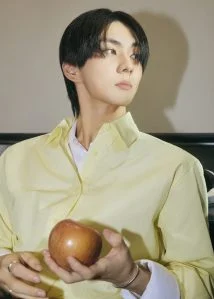
ENHYPEN: Beyond the Vampire Story
Image Credit: BELIFT LAB (HYBE)
ENHYPEN’s new release, THE SIN : PARALLEL WORLD, takes the group’s vampire narrative into a parallel universe where its characters live as ordinary humans. Officially designated a Spin Off Single, the three-track release closes the THE SIN series.
In the new story, the characters’ supernatural lives survive only in dreams, but their connection remains: they are destined to find each other in any universe. JAY told Billboard Korea that the human setting gave ENHYPEN a way to explore love and connection from a more relatable perspective.
Lead single “I Want You” combines warm synthesizers and a four-on-the-floor rhythm with melodies inspired by 2000s pop R&B. “Don’t Stop” blends minimal trap production with electro-pop and alternative R&B influences. On closing track “ILY Season,” all six members contributed lyrics for ENGENEs and sang the lines they wrote.
In an interview with Billboard Korea, the members discussed the release, their individual artistic interests and the experiences that have shaped them.
A More Human Story
Did the parallel-universe setting of THE SIN : PARALLEL WORLD open up new creative possibilities?
JAY: For the past six years, we’ve been gradually developing our story through this vampire narrative. But we had different goals we wanted to explore with this album, so we decided to use the idea of a parallel universe to deliver our message to ENGENEs in a more direct and realistic way. We wanted to imagine what our relationships would have been like if we were human, and how we might have lived.
By exploring those possibilities, we hoped to express emotions and messages that fans could connect with more personally. I think that also allowed us to show a different side of ENHYPEN. We wanted to express the love and emotions that ordinary people experience in a natural way.
What stood out about working again with producer JULiA LEWiS on “I Want You”?
JAKE: We’ve tried different things with JULiA LEWiS before, including on “Bloody Paradise.” Working together again reminded me how versatile he is and how well he works across different musical styles and genres. I think the song came together in a way that really suits our concept, which I’m very happy about.
The song is also quite long compared with some of our previous tracks, so we spent a lot of time thinking about how to make the most of our vocals. I like that listeners will have more time to hear each of the six members’ voices individually.
NI-KI: I was directed to make my voice much thinner than I had originally imagined. That was a little difficult for me.
SUNGHOON: I don’t think there was anything especially difficult overall, but the chorus is a little high. There was also a particular flow that suited the song. Rather than singing it like a conventional ballad, I had to find the right way to deliver it, and that took some work.
In Their Own Words
What did writing your own parts of “ILY Season” mean to you, especially as the closing track of the THE SIN series?
SUNOO: We wrote this song with our fans directly in mind. I found it a great opportunity to sing the lyrics I wrote. I wrote about how, even during difficult times, seeing our fans always gives me strength and energy. I wanted to express that feeling sincerely. Because those are my own words, I feel especially attached to that part.
JUNGWON: I worked on the chorus, and because I was trying to communicate my feelings to ENGENEs, I think I ended up writing in a very straightforward way. You can tell just by reading the lyrics that it’s a fan song. Some people might find the words a little cheesy, but I think that’s part of the song’s charm.
JAY: I think THE SIN is a series that will stay in our memories for a very long time. The projects we’ve released throughout the series have meant a great deal to us. Some of those releases gave us significant achievements, a sense of satisfaction and greater confidence in ourselves. They’re albums I think we’ll remember for a long time.
With this release, we wanted to focus on the message we hoped to deliver to our fans as we brought the series to a close. In that sense, I feel that we’re able to give this chapter a meaningful ending.
JUNGWON
How has your songwriting developed through “Hundred Broken Hearts,” your self-composed song “Dear Me” and “ILY Season”?
JUNGWON: I think I’ve mostly written quieter songs so far. I’m not at the stage where I can create an entire track myself, so I’ve mainly been working with producers and writing toplines over tracks they’ve made. That’s something I’m still doing and experimenting with.
Some people listen to the same music all the time, while others become interested in different songs depending on the season. I’m more like the second type. I completely change my playlist about every three months. As my listening habits change, the genres and moods of the songs I write tend to change, too. I think what I create often ends up sounding similar to the music I’m listening to at that particular time.
As ENHYPEN approaches its sixth debut anniversary, how have the members shaped your understanding of leadership and given you strength?
JUNGWON: In a way, all six of us are still relatively new to working life. We didn’t have much experience in society before this. We’ve learned what it’s like to live and work together as a group, but we also work with many different people at the company. I think those experiences are part of learning how to navigate society, too. Going through all of that together has changed the way I think about a lot of things.
I don’t think there’s one fixed answer to what makes a good leader. It really depends on the team and what kind of person suits that particular group. To be honest, I don’t necessarily think every team needs a leader. And I think the other members would probably be better at describing my leadership than I am.
But whether you’re the leader or not, when you’re working together as members of the same group, the people who can truly relate to what you’re experiencing are the other members. That’s where I get a lot of strength.
JAY

What music best reflects your artistic identity, and which artists have influenced you?
JAY: I listen to and enjoy many different kinds of music, but band music is what I love most. Technology has developed so much, and we live in a world filled with incredible music. But I don’t think people can forget the analog quality that only band music can offer. That’s one of the reasons I love it.
I listen to a lot of older music because I believe there’s a particular feeling that could only have come from the time when those songs were made. I think there must also be something that can only be expressed through the era I’m living in now. I want to explore that through band music and create something that, when people hear it in the future, makes them think about the time I lived in.
I’ve always loved bands like Eagles, Led Zeppelin, AC/DC, Metallica and Bon Jovi, as well as artists like Eric Clapton. But one of my absolute favorites is Prince. I think when you have a role model, it’s important not only to study that person, but also to ask who inspired them when they were younger. If you trace those influences further back, you can discover an entirely new perspective. That’s why I spend a lot of time watching performances and listening to music by artists from earlier generations.
One of the things that strikes me most when I listen to those legendary artists is how powerfully they communicate lyrics. I believe there was something they could convey that was unique to their era. I didn’t live through those times, so I can’t fully understand what that experience was like, but I can still feel something being communicated when I listen to their music today. That’s why, not just on this album but on every album, I try to think carefully about the meaning of the lyrics when I’m recording or performing. I think that’s really important.
Have your interests beyond music given you a new understanding of yourself?
JAY: There are things I do casually as hobbies and others I become deeply interested in. Cooking, for example, is a relatively casual hobby for me. But through appearing on programs and meeting chefs, I’ve had opportunities to learn about professions very different from my own.
Those experiences may not always seem directly connected to being a singer, but I think they can be very helpful. Meeting people from different professions and experiencing the things they love teaches me more about how society works. It also helps me understand how people can look at the same world from completely different perspectives. I think that’s valuable not just as a singer, but as a person.
JAKE

What sounds and artists have interested you lately, and what would you like to try in your own music?
JAKE: Recently, I’ve been listening to a lot of music with EDM elements. It’s a sound I’ve become quite interested in, and I sometimes think I’d like to try making that kind of music myself. But my taste changes a lot from day to day. I think the emotions I’m feeling at a particular moment are probably the most important thing. If I get the opportunity, though, I’d definitely like to challenge myself with that style.
There’s a very well-known DJ, Fred again, whose work I really like. I think he’s doing some very interesting things, and I’d love to go to one of his shows someday if I have the chance.
Have you become more comfortable expressing your emotions over the years?
JAKE: I don’t think I was naturally someone with a particularly strong sense of emotional sensitivity. But I’ve realized that being more emotionally aware can really help when you’re writing lyrics or working on music, so I’ve been trying to develop that side of myself.
I’ve lived the way I have for more than 20 years, so it’s not something that changes all at once. Still, I think being able to recognize and accept your emotions is especially helpful for people who do creative work. These days, I’m trying to let myself experience my feelings as they are.
SUNGHOON

How do you bring your own interpretation to a performance?
SUNGHOON: When it comes to performing, dance is obviously very important, so I practice a lot and try to make sure the movements are completely familiar to my body. But once I’m actually onstage, I focus a lot on my facial expressions as a way of communicating the mood of the song. I approach it almost like acting. I think about what kind of expression would suit the music, and when I approach it that way, the emotions come through more naturally.
I also pay attention to how I appear on camera. Because our work involves being filmed so often, I think about camera angles and how my expressions will look from different perspectives.
I think the stage is a place where we can show our individuality. The choreography and formations are planned, of course, but there are still many things we can express in our own ways. During our “Bloody Paradise” performances, fans seemed to really enjoy my part. Seeing that response made me feel proud and satisfied.
Has your approach to pressure changed since you were an athlete, and how have the other members helped?
SUNGHOON: I think I’ve become much more relaxed now. When I was younger and competing as an athlete, I was very strict with myself. But I realized that putting so much pressure on myself often made me even more nervous. I’ve learned that I actually feel more confident when I try to understand myself and give myself a little more room. These days, I’m trying to be more understanding toward myself and approach things with a more relaxed mindset.
When we first debuted, everything was new to me, and I wasn’t used to standing onstage, so I felt nervous. But there’s a big difference between going into a competition alone, as I did when I was an athlete, and going onstage together as a team. When I competed alone, I felt like I had to carry all the pressure myself. But when I perform with the members, it feels like we share that nervousness together. Being able to stand onstage with them has given me a lot of strength.
SUNOO

How would you sum up your philosophy on life?
SUNOO: I’ve actually realized something recently. I’ve never really liked having regrets, but lately I’ve been asking myself: If tomorrow were my last day, how would I want to live today? That thought has made me want to live each day as fully as possible, without leaving anything to regret. So if I had to put my philosophy into one sentence, it would be: “Don’t live with regrets.”
As ENHYPEN approaches its sixth debut anniversary, what feels especially meaningful to you?
SUNOO: Over the years, fans have told me that I’ve helped make their lives better or brought more happiness into their days. Hearing those things has moved me a lot. I think being able to have a positive influence on someone else’s life and bring them happiness is something truly meaningful.
I’ve tried to do that consistently until now, and I want to continue giving people positive energy and making a good impact on their lives.
NI-KI

What would you want to explore if you created choreography for yourself?
NI-KI: For me, dancing is something that helps relieve stress and gives me a sense of freedom. So I’d want to create really intense choreography — something that allows me to release all the stress and distracting thoughts I’ve been carrying around.
I’d want to portray someone with a powerful, almost boss-like presence. You know how, in movies, certain characters have an aura that immediately draws everyone’s attention? I’d love to express something like that through dance. I think it could create a performance that really commands the audience’s attention.
Is there a side of yourself that you would still like to show ENGENEs?
NI-KI: In some ways, I think ENGENEs might know me even better than I know myself. I think the person fans see is who I really am. Of course, there are emotions and moments in between that fans don’t get to see, but the person they see on screen isn’t someone I’ve deliberately created. It’s just me.
ENGENEs have watched me grow up since I was very young. If there’s a side of myself I haven’t shown them yet, I think it would be expressing my own emotions through music that I’ve written myself. Not necessarily through a group song, but through music that comes from me personally. I think that could be an interesting way to show them something new.
I don’t think I could choose just one genre. There are so many styles of music I love. Rather than deciding on a genre in advance, I’d want to choose whatever style best expresses the emotions I’m feeling or the things I want to communicate at that moment.
Source: Billboard
Related articles
 ‘Do You Have What It Takes?’: KATSEYE Appears in Trailer for K-Pop Film Inspired by the Group’s Experience
 Charli D’Amelio Dances to ‘Gabriela’ With KATSEYE During Concert, Says ‘I’m an EYEKON’
 Travis Scott, Slayyyter, Offset, Anitta and More Featured on ‘Grand Theft Auto VI: The Album’ Deluxe Edition
 Taylor Swift Surprises Brenda Lee With RIAA Diamond Plaque for ‘Incredible Song’
 Las Vegas Grand Prix Features Live Music From Backstreet Boys, Kacey Musgraves and More
 Molly Meldrum to Receive State Funeral as Kylie Minogue and Jimmy Barnes Lead Tributes
 Molly Meldrum, Australian Music Broadcaster and ‘Countdown’ Host, Dies at 83
 LISA’s ‘Leave With Me’ Voted This Week’s Favorite New Music by Fans