Ayumu Imazu Discusses ‘musubi’ and His Belief That Music Brings People Together in Billboard Japan Monthly Interview
Ayumu Imazu Yuna Yoshimori
Ayumu Imazu’s latest single, “musubi,” has become the biggest hit of his career, earning the 26-year-old singer-songwriter his first No. 1 on Billboard Japan’s Streaming Songs chart dated Oct. 14, 2026.
The love song, which uses the “red string of fate” as a motif for bonds between people, was released digitally on Oct. 2. A demo posted to TikTok in late August, when only one verse and chorus existed, spread widely and led to an “emergency release.” The track swept streaming-service charts immediately after its release.
Imazu spoke to Billboard Japan for its Monthly Feature interview series about making the song, his partnership with SKY-HI-led BMSG and his plans for Nippon Budokan and beyond. He announced the BMSG partnership in February and released CLASSIC, his first album in four years, in May. The year also marks the fifth anniversary of his major-label debut. On Jan. 31, 2027, he will play his first headlining show at Nippon Budokan, a venue he has long named as a goal.
“musubi” has been generating a huge response. When did you start working on it?
Around two months ago, in mid-August. I finished the first verse and chorus at the end of August and posted it on TikTok maybe two days after that.
The title is symbolic. “musubi” is a love song about the bonds that tie people together. Where did the idea come from?
In May, I released CLASSIC, my first album in four years, and most of it was new songs I co-wrote with overseas producers. I put so much into making it that I felt pretty empty in a way afterward. I was gradually taking things in and building my energy back up while touring, and as I considered what to make next, I vaguely thought it’d be nice to do something about bringing people together, because I feel that’s the biggest purpose of making music. I started making it with that as the big goal.
Bringing people together through music — is that one of the motivations you’ve always held onto?
Maybe not always, but with the way the times are going… right now I feel like everyone’s own worlds of the things they like are scattered all over the place. It’s becoming harder for everyone to get excited about a single piece of music or to share the same feelings. That’s why I wanted to make a song like “musubi.”
You announced your partnership with BMSG this February, and in April you also shared that you’d gotten married. Do you feel those changes in your working environment and life stage have influenced you?
I wasn’t thinking about those things in particular. More than anything, I really wanted to make something that carried on from the album. I put out CLASSIC after forming the partnership with BMSG, wanting to show the fullest extent of myself all over again, like, “This is Ayumu Imazu.” So doing the same thing didn’t feel right. My next focus naturally turned to what’s at the core of my music, the theme of connecting people.
CLASSIC was an album built around powerful, polished dance numbers that were quintessential Ayumu Imazu. At the same time, vocal-driven songs that showcase the beauty of the Japanese language, like “Anata To Itai” and “musubi,” are essential to any discussion of your discography. How do you think about balancing or blending the two?
When I was first starting out and trying to show people who Ayumu Imazu is as an artist, I was really conflicted between going with dance tracks and the fact that I also love ballads. But my strongest feeling was that I didn’t want to choose (just one), so after putting out all kinds of songs, I now feel the dance tracks are very Ayumu Imazu, and I also really feel that slow-tempo songs like “musubi” are me, too. The range of musical styles is broad, but I don’t really feel like I’m moving away from the foundation of my own feelings and personality.
Does your actual production process change depending on the style of the song?
It does. With dance tracks, I usually start with the beat, and with ballad-type songs like this one, I usually work out the chords on acoustic guitar or piano, write the melody to a certain point, and then program it.
What did you focus on most in terms of your vocals?
The demo was already out there and everyone had gotten used to hearing it, so when I recorded the final take, I had to either make it sound similar or surpass it. I’d gotten used to hearing it myself, especially from just before the chorus through the first half of the chorus, so that was where I struggled most, and probably the part I was most particular about.
Where do you feel you managed to “surpass” it?
If anything, I think it has a different kind of appeal. The demo had its own appeal as a demo, that relaxed quality of casually singing at home. The released version has more feeling put into it, I guess… it really comes across as emotional. Personally, I really feel that difference.
When you shared the demo, you posted on TikTok that you were “still deciding on a title.”
I read through lots of comments and ideas. A lot of people said they “want to use it at their wedding,” so when I was finishing the full version, I thought, “Maybe I could make it a bit more like a wedding song.” It was a great reference and really helped me out.
Tell us about the changes in your environment, too. BMSG, the company you partnered with, brings together artists brimming with individuality under the slogan “Never extinguish talent.” What kind of inspiration and influence have you gotten in that environment?
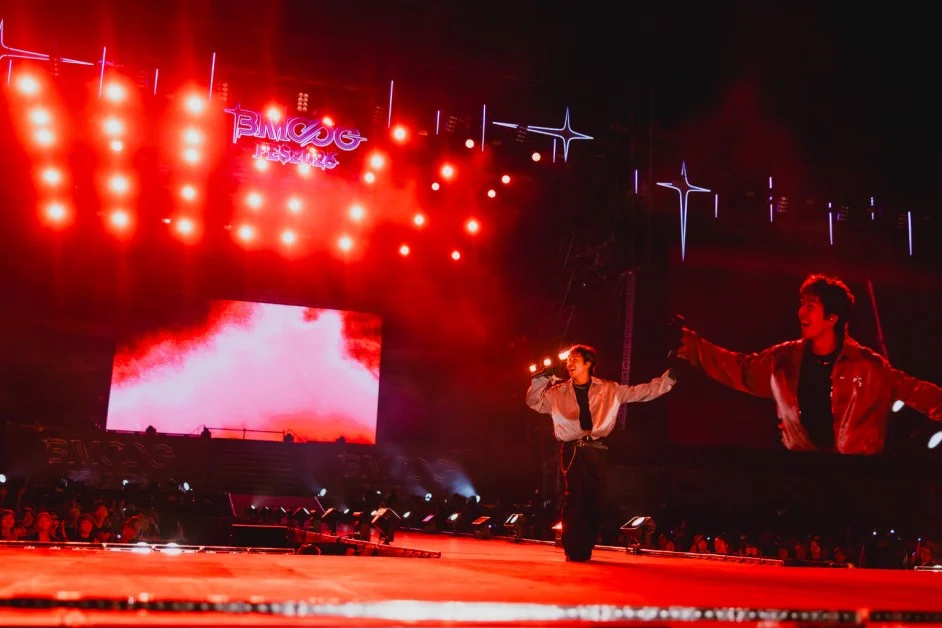
At first, I was completely wrapped up in my own stuff, but I recently took part in BMSG FES for the first time and got to see the other BMSG artists perform, and I was really inspired. Personally, it was my first time riding a trolley float, so that was a great experience too. [Laughs] Also, it reminded me that it truly is a music-first company, and since what everyone expresses is pretty different, I thought it was really great that every group and every artist puts their own colors front and center without being bound by any set format.
BMSG also has a vision called “TYOISM,” about reaching the world from Tokyo. With you joining — someone who moved to the U.S. at 14 and is still based there and in Japan — it seems likely to spark some new chemistry.
I think I have a pretty good feel for how things are done abroad, so when it comes to opening doors to global challenges, I definitely want to do that together with BMSG. Mr. Hidaka (SKY-HI) and I had talked about that kind of thing from the start.
Now that five years have passed since your 2021 major-label debut, how do you see the phase you’re in as an artist?
Right now might be a phase where I just make music really freely, without overthinking it. Last year or so, I was thinking a lot about things like, “I want to release this kind of song and become this kind of artist,” but lately I feel like I’ve thought it all through, so it’s more like I’m going with the flow.
What artists have you been listening to a lot lately?
I’ve had Remi Wolf’s album (Mud) on heavy rotation lately. I really love indie rock-type stuff, too.
You have a headlining show set at Nippon Budokan in January 2027. Tell us how you’re feeling going in.
The Budokan is truly a stage I’ve set as a goal, so I think it’s going to be a really flashy show. [Laughs] More people than ever are listening to my music, and I’ve got a concert booked at my biggest venue yet, so I’m super happy and feel like all I have to do is keep doing what I’ve been doing. I want to keep creating spaces where everyone can come together as one and enjoy music at bigger and bigger venues.
This interview by Takuto Ueda first appeared on Billboard Japan.
Source: Billboard
Related articles
 BTS’ RM Trends on Social Media After Changing His Hair
 SXSW Announces First 100 Artists for 2027 Music Festival
 Cardi B Celebrates Son Grey’s First Birthday With Lavish Party
 Snubs and Surprises in the 2027 Dance/Electronic Grammy Nominations
 Mau P Set to Headline Madison Square Garden in 2027
 LCD Soundsystem to Headline First of New Platt Fields Park Concerts in Manchester in 2027
 Gracie Abrams Announces 2027 Australian Arena Shows for ‘Look at My Life Tour’
 U2 and Dolly Parton’s ‘Torn’ Tops This Week’s Favorite New Music Poll