A Legendary MMO Designer Is Attempting to Recapture the Magic of Early World of Warcraft
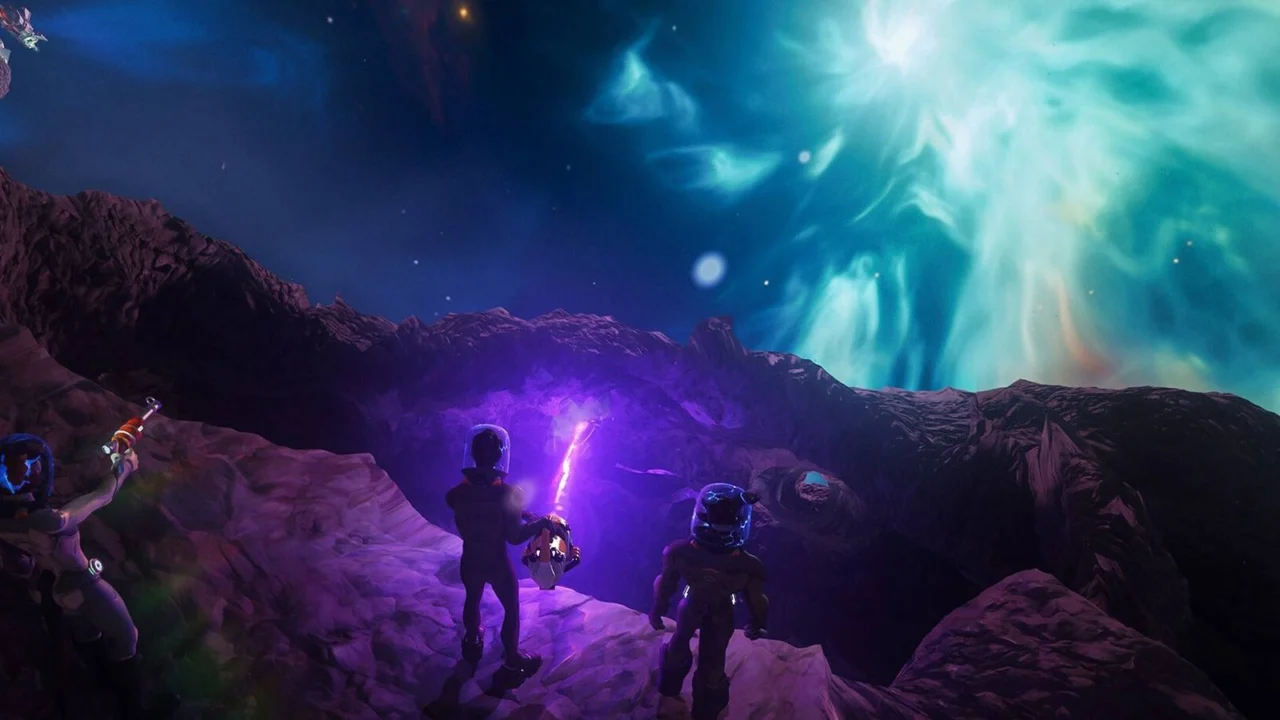
My guided tour of Stars Reach, the upcoming MMO, didn’t start with a high-octane battle or a ship-to-ship dogfight. Raph Koster—the visionary architect behind Ultima Online and Star Wars Galaxies—had something more profound in mind. He bypassed the combat systems entirely, opting instead to guide me toward the planet’s surface. He wanted me to witness the weather.
“This is the project I have been striving to build for three decades,” Koster told Polygon.
In Stars Reach, the environment is a living, breathing participant. Rain doesn’t just fall; it pools in depressions, carves intricate riverbeds, and shapes the landscape. Winters see lakes turn to ice, while forests expand and flourish—or succumb to sweeping wildfires. Deep underground, reckless mining can trigger cave-ins. Every square meter of these worlds is governed by complex simulations of temperature, humidity, and geology. Koster describes a world where players can liquefy stone into magma, let it cool into igneous rock, or inadvertently trigger an environmental catastrophe. My reaction was one of pure, unadulterated curiosity: Why go to such lengths?
“We are aiming to recapture the spirit of a true alternate reality,” Koster explained. “A place where you can step into a persona entirely different from your own, explore the impossible alongside friends, and lose yourself in the wonder of discovery.”
It is a refreshing, almost defiant stance to take in a 2026 landscape dominated by rigid engagement loops and battle passes. Koster has never been one to follow trends; he is a scholar of systems, driven by the conviction that virtual worlds should possess a sense of authentic life. He believes that if these spaces are constructed with enough depth, they inevitably become socially significant. Since most of us will never witness the colonization of Mars or the discovery of Earth-like exoplanets, Koster is bringing that journey to us. The saga begins when Stars Reach launches into early access this summer.
Koster first floated the seeds of this ambitious project shortly after Ultima Online‘s success in the late 90s. While decades of technological leaps and industry shifts have passed, the core vision remained. Now, he feels the hardware and software finally have the horsepower to match his imagination.
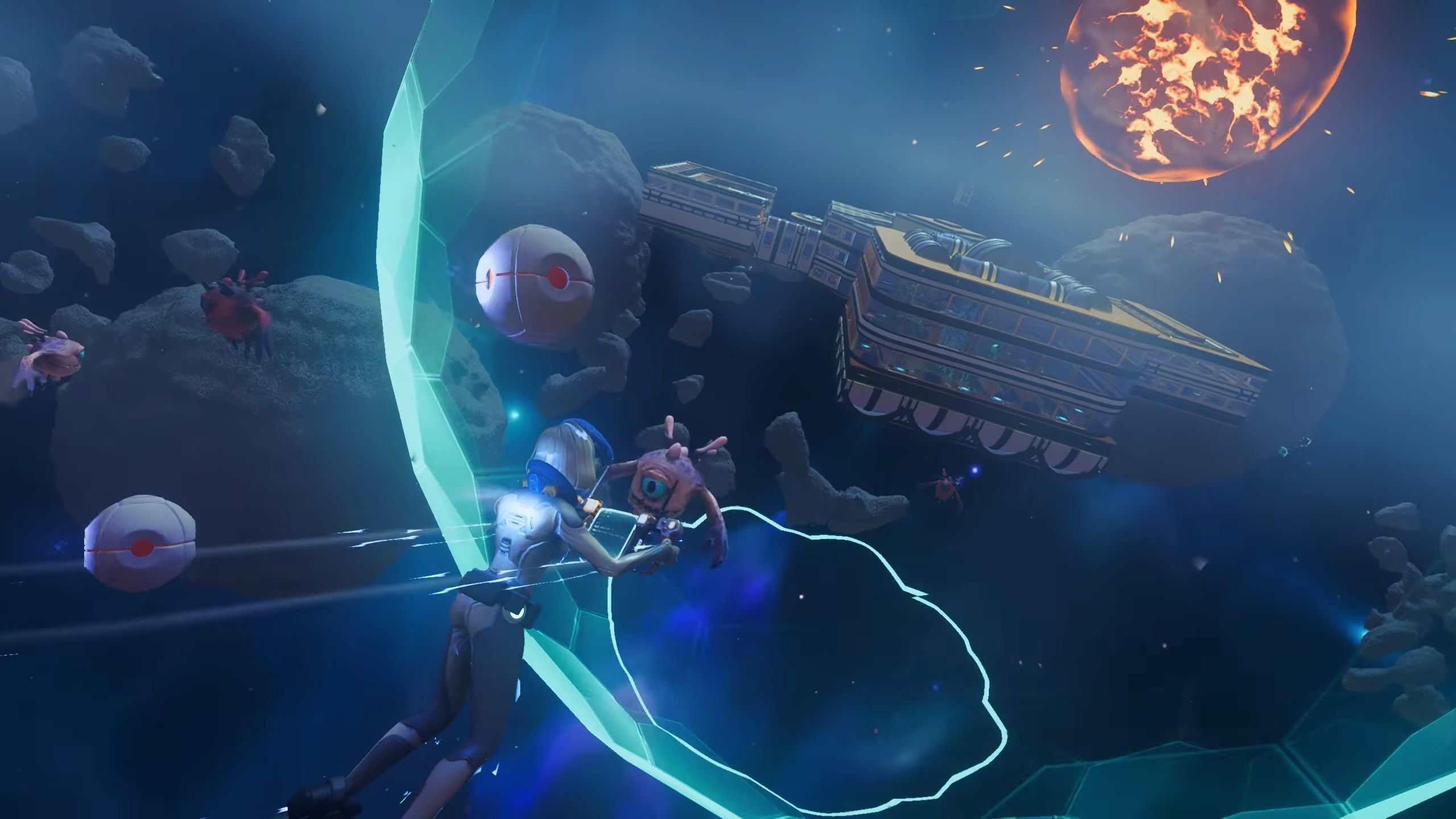
Watching Stars Reach is a dizzying experience. It is a vast expanse of thousands of worlds linked by transient, shifting wormholes, ensuring that space itself is in a constant state of flux. Discoveries are frequent, and space lanes can unexpectedly vanish. Within these systems, players serve as the primary actors: mining asteroids, terraforming inhospitable zones, founding cities, managing trade empires, or simply acting as itinerant explorers.
Koster isn’t interested in holding the player’s hand. He emphasized that the game relies on “emergence” rather than a prescribed script. He isn’t aiming to displace giants like World of Warcraft; he’s aiming to build a foundation for something else entirely.
“MMOs aren’t a singular genre,” Koster noted. “They are virtual theaters—places where you go to host and play games.”
Koster identifies the “narrowing” of the MMO as the great tragedy of the last twenty years. Following the explosion of World of Warcraft, the industry moved away from the experimental sandbox roots of early MUDs and titles like EverQuest, focusing instead on streamlined theme-park designs. He argues that other genres eventually cannibalized the unique mechanics of the MMO—social structures, subscription models, and live-service operations—leaving the MMO genre itself feeling hollowed out.
“MMOs were the original innovators of live-service, community management, and monetization,” Koster said. “Today, the entire industry is effectively running on the blueprint we created.”
Stars Reach is a deliberate retreat from the “raid-and-repeat” formula. It is an attempt to leverage modern tech to realize a deeper, more organic experience. Seeing the simulation in action is captivating—like watching a spaceman melt a glacier to uncover an alien ruin, or realizing the forest you’re walking through grew based on specific moisture levels. There is a sense of genuine consequence here; players can even drive local species to extinction if they aren’t responsible stewards.
“MMOs aren’t a game genre,” Koster said. “They’re virtual places in which you put games.”
During the demo, Koster highlighted a thriving player settlement. It looked remarkably organic, complete with public parks and transit systems. The kicker? None of it was pre-built by his studio, Playable Worlds. It was entirely the result of player initiative.
“The residents actually held an election,” Koster said while touring the city. “There are 78 citizens here, and they voted in their own mayor.”
In Stars Reach, players govern the resources and establish the laws of their sectors. Some settlements prioritize environmental conservation, while others lean into industrial exploitation or social experiments. For Koster, this is the endgame content. While the game currently emphasizes cooperative, player-versus-environment play, the social dynamics remain a core pillar. “We provide the systems that encourage collaboration, but we leave the difficult, nuanced problems of governance to the players.”
This autonomy includes the ability to build dystopias. If you and your peers want to drain a planet of its resources and rule over a graveyard, the game allows it. “The ‘tragedy of the commons’ is an endgame puzzle for players to solve themselves,” he said. “How do they choose to manage their slice of the universe?”
Reflecting on his career, Koster acknowledges that MMO designers once believed they were constructing the next evolution of the internet—a goal that eventually proved elusive.
“Social media arrived and essentially co-opted our infrastructure,” he noted dryly. He isn’t just venting; he believes that while MMOs invented the mechanics of modern online social platforms, they failed to master governance. “Modern social media platforms can be quite hostile. I wish we had cracked that code earlier, but we’ve learned a great deal since then.”
Stars Reach represents a refined approach to that challenge. By embedding moderation and community standards into the game’s infrastructure, players can define their own social boundaries. “Think of it like an MMO that functions like Discord—where every zone acts as its own autonomous server, but remains part of a vast, interconnected ecosystem.”
It’s a philosophy that permeates every level of Stars Reach. While the weather systems and geological simulations are marvels of design, Koster views them primarily as tools to preserve a sense of wonder. He wants to prevent the “Wizard of Oz” effect, where the player pulls back the curtain and sees only cold, unfeeling code. “I’m focused on preserving the magic,” Koster said. “I want an environment where players can simply exist, play, and live, rather than feeling like they are trapped in a perpetual grind.”
Source: Polygon
Related articles
 Resident Evil Star Explains Why He Did Not Train Before Filming
 Stronghold 4 Developers Show Skirmish Mode
 Resident Evil Fan Poll Names Top 10 Characters as Voice Actor Hints at Solo Project
 Assassin’s Creed Mirage Performance Compared With and Without Denuvo
 Ralph Fiennes Movie The Return Begins Streaming on Paramount Plus
 The Finals Developers Preparing Major Update With Destructibility and Arena Enhancements
 Take-Two Explains Decision Not to Carry Over NBA 2K Virtual Currency
 Insomniac Games Denies Using AI in Marvel’s Wolverine and Considers Making Smell Trail Optional