A Decade Later, Strategy Sim Kings Vindicate Sega and Prove Microsoft Wrong
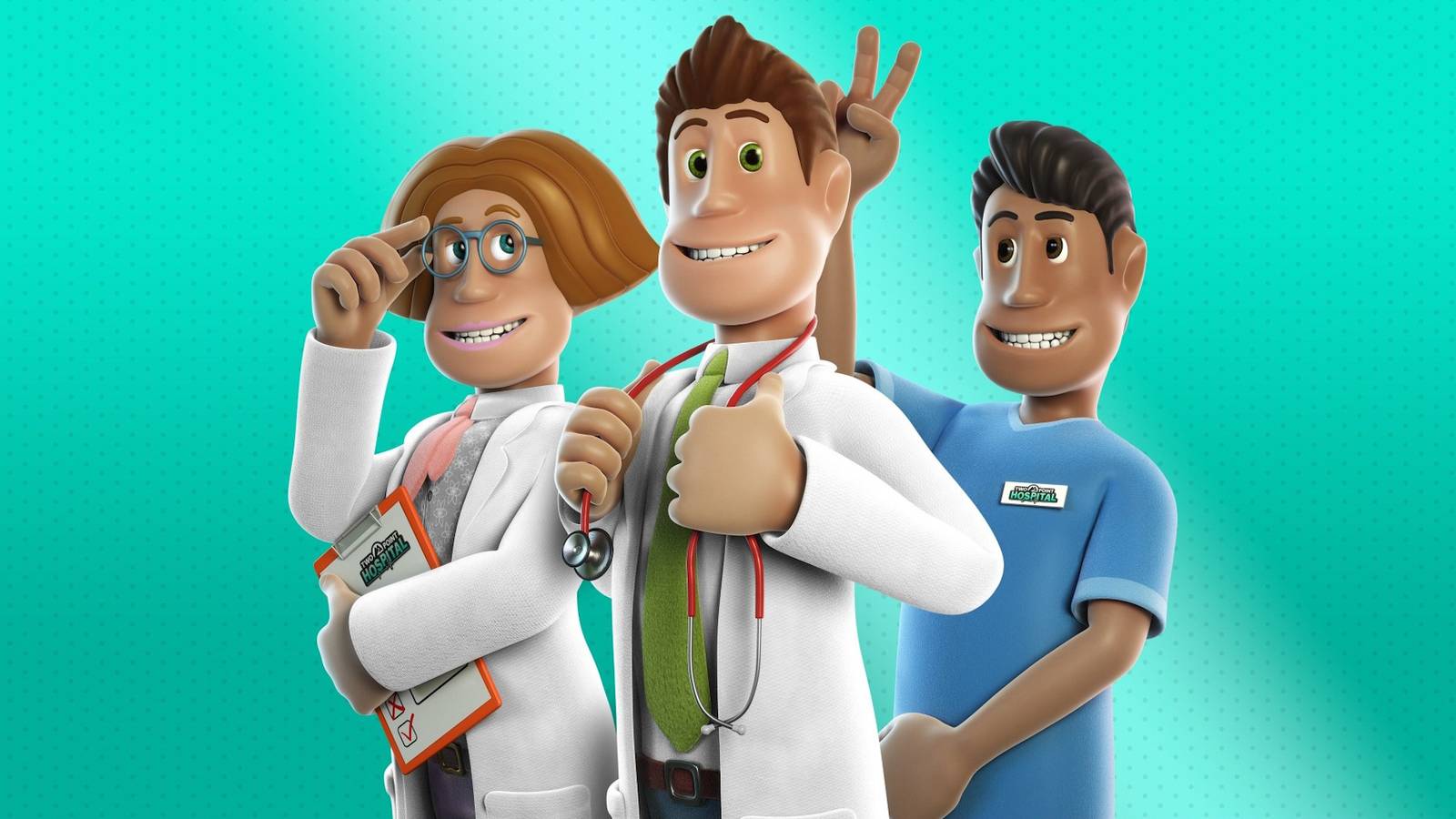
Two Point Studios—the creative powerhouse behind Two Point Hospital and the brilliant Two Point Museum—initially partnered with Sega back in 2016 for an 18-month venture. A decade later, the enterprise continues to thrive, cementing its status as one of Sega’s premier first-party developers. Reaching the ten-year mark is a remarkable milestone for any game maker, but it has become an extraordinary rarity within a turbulent industry, especially for independent teams crafting specialized, mid-budget experiences rather than bite-sized indie titles or blockbuster epics. Polygon sat down with Two Point co-founders Gary Carr and Ben Hymers alongside Chief Operating Officer Jo Koehler to discuss how the studio defied the odds—and corporate overreach—to champion the enduring value of staying lean and cultivating genuine enjoyment.
Although Two Point Studios officially marked its tenth anniversary, its foundational roots trace back to the twilight years of Lionhead Studios, the legendary developers behind Fable. Carr was part of an exploratory prototype team alongside Ben Hymers, who currently serves as the technical director. Having collaborated on previous projects like Lionhead’s studio simulator The Movies, Carr approached Hymers to see if he would be open to breaking away and launching an entirely independent venture.
“I was seasoned and he was young,” Carr reflects. “Essentially, I wanted to harness his youth and hold onto it.”
While Carr delivers the remark with a grin, Hymers’ perspective proved invaluable. Having grown up adoring the classic Bullfrog Productions titles Carr had previously worked on—such as Theme Hospital—Hymers frequently questioned why the industry had abandoned that particular design philosophy. The answer was straightforward, at least from the perspective of corporate executives tasked with greenlighting projects: management simulations simply lacked mainstream market appeal.
“When we pitched these concepts at Microsoft, the prevailing sentiment was clear,” Carr recalls. “‘We require billion-dollar franchises; we cannot afford to leave that kind of revenue unclaimed.’ That specific corporate mindset genuinely frustrated me.”
 Image: Two Point Studios/Sega
Microsoft’s insistence that simulation titles failed to move units initially discouraged Carr and fellow co-founder Mark Webley. However, Hymers steadfastly maintained that the magnetic combination of nostalgic design and intricate management mechanics held immense untapped potential, ultimately persuading Carr that corporate assumptions might be fundamentally flawed.
“To be completely honest, I assumed simulation games had run their course,” Carr admits. “Ben definitely forced me to reconsider that preconception. When you spend decades immersed in the industry, you easily lose touch with public sentiment and what players genuinely desire.”
Figuring that if Microsoft was content to abandon that revenue stream, another publisher would happily capitalize on it, the trio decided to position themselves firmly in the space just below AAA. They aimed to secure the creative freedom required to craft the kinds of experiences they personally loved playing. That vision crystallized into Two Point Hospital, a spiritual successor to Bullfrog’s beloved 1997 classic, Theme Hospital.
According to Carr and Hymers, subsequent events fell into place with remarkable serendipity. At the exact time Two Point was forming, Sega’s “Searchlight” initiative—an effort dedicated to discovering smaller, independent developers whose work complemented the publisher’s larger releases—was hitting its stride. In short, Sega was actively hunting for sub-AAA projects. As if that weren’t fortunate enough, Carr later learned that Sega executives had been discussing how wonderful it would be to acquire a studio akin to Bullfrog just days before Two Point reached out.
Assembling the right talent proved surprisingly seamless. Microsoft shuttered Lionhead in 2016 precisely as Hymers, Webley, and Carr were finalizing their negotiations with Sega. Consequently, a talented pool of developers who shared a rich history together and possessed specialized expertise in simulation design suddenly found themselves in need of work. Furthermore, Carr brought on Jo Koehler, an experienced producer with a background at Electronic Arts and Playsport (the studio behind Motorsport Manager). Production kicked off with a core team of just six people, a number that gradually expanded to 14 by the time Hospital launched.
In terms of game development pipelines, building Two Point Hospital proceeded with an unusual smoothness—the sort of frictionless collaboration that only materializes when seasoned veterans who deeply understand one another work toward a unified goal.
 Image: Two Point Studios/Sega
“We shared an incredibly clear, cohesive vision of what we were building, which drastically accelerated the entire process,” Hymers notes.
“We placed our trust in one another,” Carr adds. “Because everyone brought immense experience to the table, we maintained a fluid, organic approach to design and aesthetic style where every voice mattered. It felt magical, almost as if we had stepped back twenty years to the formative era of 1980s and 90s development, stripped of heavy documentation and bureaucratic processes. It was driven purely by creative energy.”
Operating without a predefined target audience or rigid design bibles to navigate, the Two Point team improvised freely. Carr describes how the crew allowed themselves to channel the lighthearted, charming style of their early days at Bullfrog and Lionhead. For them, the project functioned as a therapeutic creative endeavor as much as a commercial risk—what they mistakenly assumed might be their final opportunity to pursue their passion alongside respected peers.
Two Point Hospital debuted in August 2018. Carr initially anticipated that the studio’s lifespan would simply match the duration of Sega’s funding—an estimated maximum of two years. However, the game’s monumental success completely altered their trajectory. Despite launching amid fierce competition—sharing a release window with heavyweights like Madden NFL 19, Overcooked 2, and Monster Hunter: World—the title climbed to the top of the Steam sales charts in more than 40 territories.
“It completely blew us away,” Koehler reflects. “I am not entirely sure what we anticipated, but it certainly wasn’t that level of reception.”
“Our projected break-even timeline was roughly 18 months down the line, at which point we hoped to have built a financial cushion,” Carr explains. “Instead, we repaid Sega’s financial advances in just two and a half days. It was surreal and deeply emotional. Typically, when developers release a game, they are at their most vulnerable because their funds are entirely depleted. Fortunately for us, we instantly found ourselves in the black.”
 Image: Two Point Studios/Sega
To the team’s profound surprise, Two Point Hospital performed exceptionally well in China, Germany, the United States, and the United Kingdom. Historically, similar management sims had underperformed in Germany and China, while Theme Hospital‘s historical US sales lagged significantly behind its UK figures. The massive enthusiasm caught Sega entirely off guard as well. Two Point promptly negotiated a contract amendment—their initial agreement contained zero provisions for post-launch endeavors—and spent the following months addressing bugs, analyzing user feedback late into the night, and mapping out their next strategic move.
“We were ecstatic,” Koehler states. “We simply wanted to make [Hospital] bigger, and we succeeded.”
Over the next four years, Two Point Studios rolled out a steady stream of free updates and paid expansions for Hospital while simultaneously initiating discussions with Sega regarding what would eventually become Two Point Campus. However, immense success brought unexpected complexities and commercial pressures. Given the short-term parameters of their original contract and modest expectations, neither Sega nor Two Point had prepared contingency plans for managing a follow-up hit.
“Anxiety crept in,” Carr admits. “We were a relatively unknown independent studio founded just two years prior, yet right on our second anniversary, we claimed the top spot on Steam. Public registries easily reveal your independent status, and suddenly, we found ourselves swarmed with outside corporate interest.”
Ultimately, Sega wanted to retain Two Point within its corporate family, and the studio felt a profound sense of loyalty to its primary benefactor. Sega had supported them unconditionally without demanding ownership of Two Point’s intellectual properties or exercising heavy-handed control; they simply provided the resources necessary to make the game. Consequently, Two Point politely deflected external acquisition bids and officially transitioned into an internal first-party Sega studio.
While Two Point Hospital served as a parting tribute to a bygone era of game development, that era proved far more resilient than anticipated. With Two Point Campus, Two Point sought to carve out a distinct modern identity rather than merely coasting on nostalgia. Webley championed the design philosophy that engaging settings can stem from any familiar environment, whether grand or mundane. Because virtually everyone possesses personal experiences with higher education—and few developers had ever utilized a college campus as a simulation backdrop—the premise felt like a natural progression.
It also provided an ideal platform to scale up the lessons learned from Hospital. Koehler spearheaded initiatives to synthesize post-launch community feedback, pinpointing minor friction points that frustrated players while gaining a broader understanding of the specific demographic drawn to Two Point’s brand of simulation.
 Image: Two Point Studios/Sega
Whether by sheer fortune or by catering to audiences long neglected by mainstream developers, the individuals who embraced Two Point Hospital perfectly aligned with the core demographic Carr and his colleagues had targeted throughout their careers. They desired deep simulation mechanics devoid of frustrating complexity, coupled with lighthearted humor that didn’t sacrifice strategic depth. At the time, viable alternatives in that mid-budget tier were scarce, and even a decade later, Two Point’s titles remain virtually uncontested within their specialized niche. However, unlike the passive player bases of classic Bullfrog and Lionhead eras, Two Point’s modern community arrived armed with vocal opinions on how to refine the experience—along with direct channels to share them.
For Carr, this dynamic represented uncharted territory.
“Historically, we operated as traditional developers of that era, remaining largely disconnected from the end consumer,” Carr notes. “Now, we actively consult our community regarding their desires. It fundamentally transformed my daily experience, shifting me away from isolated development bubbles and into direct dialogue with players. It transcends mere retention marketing; listening to them directly informs how we craft better experiences for subsequent projects.”
For Campus and the subsequent Museum, many of these insights demanded stronger underlying technical architectures. Two Point prioritized console optimization concurrently with PC development, refining user interfaces, button mapping, and navigation pain points that plagued Hospital. Furthermore, the team engineered new gameplay systems designed to give simulated individuals genuine personality rather than treating them as mere background fodder. Campus introduced notification tracking that lets players favorite specific students and professors to monitor their academic progress or celebrate budding friendships. This evolved into the intricate staff traits, dynamic events, and potential perils featured in Two Point Museum, where staff members can face catastrophic mishaps while hunting down rare exhibits.
Yet, heeding player feedback also necessitated hard pivots in design philosophy and retroactively rebuilding elements of existing titles. Museum initially shipped with an overly punishing security framework—a design choice partially inspired by high-profile real-world heists discussed during production. However, as player grievances mounted, Koehler notes the team recognized the underlying issue: while contemporary and realistic, granting players absolute creative freedom to design a museum only to watch it systematically dismantled by thieves ultimately felt deeply unrewarding.
Scaling operations to support intricate new systems and post-launch updates presented an entirely different corporate hurdle: preserving a lean, manageable studio size. Koehler and the co-founders share a unified philosophy that introducing heavy layers of middle management invariably degrades studio culture. Carr credits Koehler with expertly steering operations to protect that creative environment. Two Point Studios operated with just 14 staff members during Hospital‘s launch; today, the core team numbers around 50, supplemented by carefully vetted external support partners for specialized tasks outside their immediate focus.
“Many of us previously worked at companies that scaled up aggressively, which ultimately dismantled the studio culture,” Hymers observes. “We actively avoided that trap because we genuinely love our collaborative workflow.”
“We are developers first and foremost,” Carr concludes. “At massive studios, you inevitably transform into administrative managers. We entered the industry simply to build games. Therefore, we keep our hands dirty and deliberately remain small. Otherwise, we would just become managers all over again.”
Related articles
 Genshin Impact Players Report Visual Glitches in Snezhnaya After Version 7.0 Update as miHoYo Releases First Fixes
 Paradox Testing Modern Processor Support to Improve Hearts of Iron IV Performance
 The Sims 4 to Receive Free Content Ahead of 12th Anniversary
 Developers of Heroes of Might and Magic: Olden Era Fix Mouse Freezing Issue
 Saber Interactive Releases Patch for Warhammer 40,000: Space Marine 2 Adding Steam Workshop Support
 Cozy Fantasy Shop Cleaning Simulator Attacked by Evil Wizard Released on Steam
 Nikita Buyanov Shows New Containers and Weapons in Escape from Tarkov Teasers
 Rockstar Launches Brand War Event and Bonuses in GTA Online