5 Perfect Time-Travel Movies That Actually Make Sense

Most time travel narratives treat the laws of physics as mere suggestions. Filmmakers typically cherry-pick concepts that serve the plot while conveniently disregarding the mathematical consequences of their mechanics. For example, in Back to the Future Part II, Doc Brown asserts that Marty and Jennifer cannot encounter their future selves—a narrative hurdle designed to avoid awkward interactions rather than a reflection of actual quantum theory.
This illustrates a recurring pattern: when you scrutinize these cinematic worlds through the lens of rigorous scientific inquiry, the internal logic almost always collapses. However, a handful of films stand apart. These stories either lean heavily on actual theoretical physics or are built from the ground up on scientific principles. While truly “hard” sci-fi is rare, here are five films that approach time travel with surprising scientific integrity.
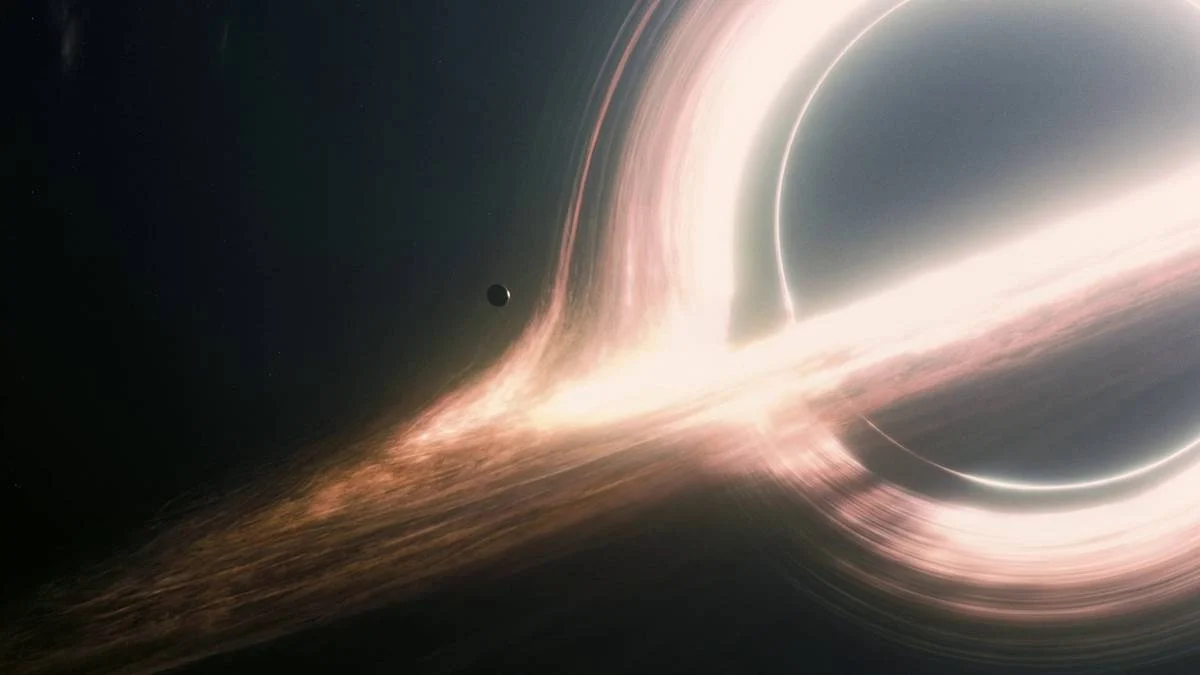
5 Interstellar
Christopher Nolan’s 2014 epic is arguably the gold standard for blending high-concept physics with storytelling. Much of this credibility stems from the collaboration with theoretical physicist Kip Thorne, whose expertise ensured the film’s depiction of black holes and gravitational time dilation remained grounded in legitimate academic research.
The film’s climax moves into more speculative territory with the introduction of a “tesseract”—a multidimensional space constructed by future humans to treat time as a physical dimension. While it functions as a narrative leap, it remains firmly rooted in the idea of probing the unknown aspects of black hole singularities. It suggests that if a civilization could master gravity, time would simply be another vector to traverse.
4 Planet of the Apes
Strictly speaking, any narrative involving travel into the future holds a higher scientific merit than those attempting to reach the past. Forward time travel is a verified physical phenomenon known as time dilation; it occurs whenever one travels at extreme velocities—specifically, approaching the speed of light.
In the original 1968 Planet of the Apes, George Taylor’s crew experiences this firsthand. By traveling near light speed, their internal clocks slowed significantly relative to the rest of the universe. When they finally crash, the Earth they return to has aged thousands of years, leaving them stranded in a future civilization. It is a scientifically sound, unidirectional journey, avoiding the paradoxes that typically render reverse time travel theoretically impossible.
3 Avengers: Endgame
Though it may seem contradictory to praise a superhero film featuring talking raccoons for its scientific accuracy, Endgame deserves credit for explicitly rejecting the common “change the past to fix the future” trope. Instead, it leans into the Many Worlds Interpretation of quantum mechanics.
As Hulk explains, altering events in the past does not rewrite your original timeline; it creates a divergent branch. This aligns with the work of physicists like David Deutsch, who theorize that time travel creates parallel realities rather than altering a fixed one. While the technology (a “Time-Space GPS”) is largely speculative, the film’s acknowledgement of the quantum realm—a place where traditional temporal flow is non-existent—is a nod to real-world quantum theory.
2 Primer
If Endgame is an accessible popcorn flick, Primer is a complex, low-budget puzzle that demands total mental focus. Written and directed by former engineer Shane Carruth, this film is widely lauded for its cold, clinical approach to the mechanics of time travel. It portrays scientists who treat their discovery not with wonder, but with the practical, often messy pragmatism of engineers.
The film’s logic is strictly enforced: you cannot travel further back than the moment the machine was first activated, and the process requires the traveler to experience the time duration in reverse, effectively meaning there is no “instant” teleportation. Drawing inspiration from Feynman diagrams, Primer treats time like a circuit. It is a harrowing, rule-bound narrative that avoids the “magic” typical of the genre in favor of a terrifyingly consistent loop.
1 Predestination
Carl Sagan once argued that the best science fiction acts as a prism for the truths of the universe. Robert A. Heinlein’s short story, “—All You Zombies—,” upon which Predestination is based, is the ultimate exploration of the “causal loop.” The film presents a protagonist trapped in a life cycle that begins and ends with himself, illustrating the ultimate failure of time travel to fix anything.
By forcing the viewer to confront a loop where cause and effect are inextricably tangled, the film avoids the paradoxes that plague other time travel movies by simply accepting them. It serves as a rigorous, if existential, explanation of why time travel is ultimately a closed system—a perfect, self-fulfilling loop that demonstrates exactly why we shouldn’t attempt to tamper with the past.
Source: Polygon
Related articles
 Capcom Discloses Technical Details for Monster Hunter Wilds on Switch 2
 Nintendo Details Future Plans for Successor to Switch
 Expert Explains Why Japanese Studios Have Fewer Layoffs
 HBO Reveals Harry Potter Series Props
 Writer Details Unmade Spider-Man Film Featuring Ben Reilly, Matt Murdock, and Cat-Spider
 Golden Axe TV Series Showrunners Consider Season 2 and SEGA Universe Expansion
 Superman Film Will Not Be DCU Equivalent of Avengers, Says James Gunn
 New Footage of Made in Abyss Movie Released