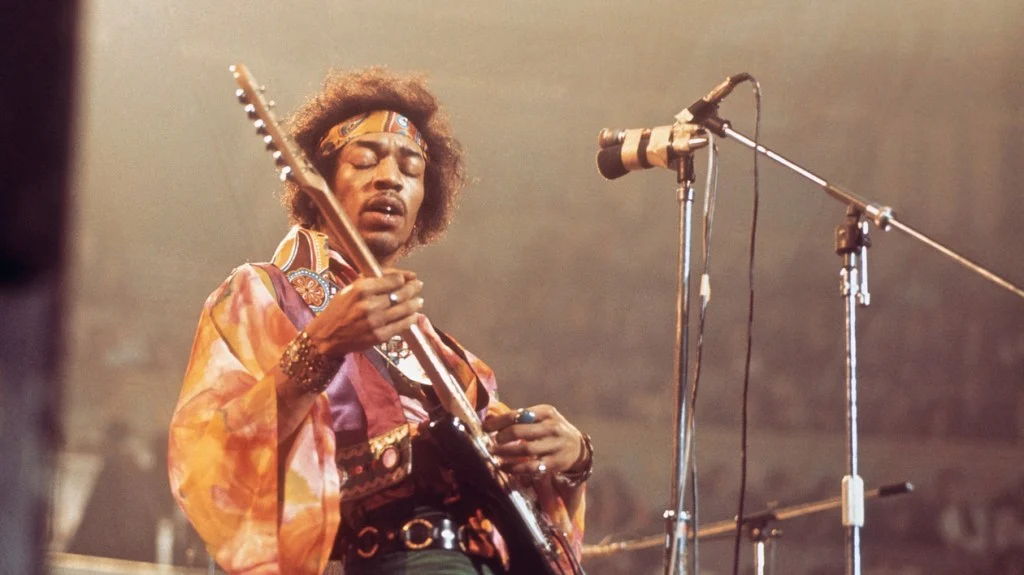
15 Songs Featuring the Wah-Wah Guitar Pedal’s Funky, Fluid Sound
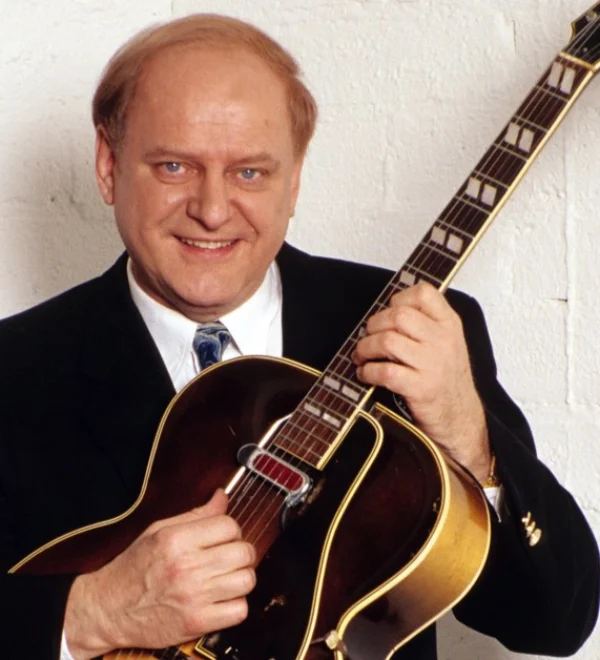
Del Casher, the session musician and wah-wah pedal inventor who worked with Gene Autry and Frank Sinatra, died Oct. 1 at age 88, his family announced this week.
According to the story, Casher demonstrated the pedal to Frank Zappa during a 1966 jam session with the Mothers of Invention. Zappa later gave one to Jimi Hendrix, who made it a centerpiece of his guitar playing. From the late 1960s onward, hundreds, if not thousands, of rock guitarists used the pedal for riffs and solos.
Its use also spread across blues, funk, soul, heavy metal, hip-hop, hair metal, jam bands and grunge. Eric Clapton, Jimmy Page, Eddie Hazel, Trey Anastasio, Jerry Cantrell, Kirk Hammett and Mike McCready are among the guitarists who have used it. Motown guitarist Melvin Ragin became known as “Wah Wah Watson” for his use of the pedal.
Here are 15 songs that showcase the wah-wah pedal and Casher’s influence.
Jimi Hendrix, “Voodoo Child (Slight Return)”
The introduction to “Voodoo Child” is perhaps the most recognizable use of the pedal in Hendrix’s catalog, and possibly in music history.
Cream, “White Room”
Before his solo career, Eric Clapton used the pedal on several Cream tracks. On “White Room,” his wah-driven solo carries the song toward its fade-out.
Led Zeppelin, “Dazed and Confused”
Jimmy Page used the wah’s shifting tone to create an eerie atmosphere on “Dazed and Confused”, at times making his guitar sound like a banshee’s wail. That effect was separate from his later experiments with theremins.
Frank Zappa, “Willie the Pimp”
Just over a minute into “Willie the Pimp” from 1969’s Hot Rats, Zappa begins exploring the pedal’s unusual sounds. He continues for more than eight minutes, moving around the fretboard while staying locked in with the rhythm section.
The Temptations, “Papa Was a Rolling Stone”
The wah guitar comes from Wah Wah Watson, who joined Motown’s house band, the Funk Brothers, in 1968. His wah-treated chords form part of the song’s backbone rather than a solo.
Marvin Gaye, “Let’s Get It On”
Three wah-treated notes open “Let’s Get It On”, though the pedal plays a smaller role after that, as Gaye’s voice and the horn and rhythm sections take over. The opening is commonly attributed to Wah Wah Watson, who played on the track, but some say Motown session musician Don Peake played it. The identity of the guitarist on the recording remains unclear.
James Brown, “Funky President”
The wah guitar adds a wavering texture to “Funky President,” while the steady rhythm guitar also shapes its feel. As on Curtis Mayfield’s “Freddie’s Dead,” the wah is a secondary but essential part of the arrangement.
Funkadelic, “Maggot Brain”
George Clinton created Funkadelic and its sister act Parliament. On “Maggot Brain”, guitarist Eddie Hazel uses the wah to make his guitar sound as if it is weeping for the better part of 10 minutes. As the story goes, Hazel was on acid in the studio when he was told to imagine that his mother had died.
Chicago, “25 or 6 to 4”
One of the best-known elements of what is probably Chicago’s most famous song is Terry Kath’s extended guitar solo. It begins with distortion before the lead guitarist shifts to wah halfway through, changing his tone as he climbs the fretboard.
Isaac Hayes, “Theme From Shaft”
Charles “Skip” Pitts’ wah guitar runs beneath the keys and strings of the “Shaft” theme song, helping define its groove. The track reached No. 1 on the Hot 100 and won an Academy Award for best original song. Pitts also worked with the Isley Brothers and as a Stax studio musician, and his work was later widely sampled in hip-hop.
Metallica, “Enter Sandman”
The wah appears behind the signature riff on “Enter Sandman” before shaping Kirk Hammett’s solo. Hammett uses the pedal on other Metallica songs, too.
Guns N’ Roses, “Sweet Child O’ Mine”
Slash’s opening riff is central to “Sweet Child O’ Mine”, but his solo is also widely known. He uses the wah midway through it, adding to the melodic quality of his Les Paul tone.
Alice in Chains, “Man in the Box”
On Alice in Chains’ breakthrough hit “Man in the Box,” Jerry Cantrell uses the wah to give the verse riffs a heavy, distorted sound and his solo a crying quality. Effects that echo Layne Staley’s voice add to the guitar’s weight.
Pearl Jam, “Go”
Pearl Jam and Alice in Chains both came from Seattle, and their guitarists Mike McCready and Jerry Cantrell share an affinity for the wah pedal. On “Go”, from Pearl Jam’s second album Vs., McCready uses it for a solo that complements Eddie Vedder’s vocals.
Phish, “The Moma Dance”
Trey Anastasio often uses his wah pedal in Phish’s live funk playing, and his staccato style is central to “The Moma Dance.” The fan favorite often serves as a launchpad for dancing at shows. Anastasio also uses the wah to enhance solos on songs including “Farmhouse” and “Ghost.”
Source: Billboard
Related articles
 Streams of Juan Atkins’ Catalog Rise 1,285% After Producer’s Death
 Forbes Names Paul McCartney a Billionaire and the World’s Third-Richest Musician
 Robbie Williams Defends Olivia Rodrigo Over Claims ‘Take Me Home’ Sounds Like His Hit: ‘I Couldn’t Care Less’
 Del Casher, Inventor of the Guitar Wah-Wah Pedal, Dies at 88
 Jung Kook Appears in Festive Fashion Campaign for ‘Styles That I Always Come Back To’
 Taylor Swift and Karlie Kloss attend Travis Kelce’s Chiefs game in Kansas City
 Celine Dion goes backstage with Metallica after rocking out at Sphere, saying she loved the show
 U2 Weigh In on Tour Controversy Involving Ed Sheeran and Macklemore