10 Perfectly Designed Final Fantasy Magic Cards—All 10/10, No Notes
Magic: The Gathering’s Final Fantasy crossover celebrates one of gaming’s most enduring series, bringing its heroes, monsters, settings, and unforgettable moments to the tabletop. With 16 mainline games—and plenty of sequels and spin-offs—Wizards of the Coast faced a sizeable challenge: translating decades of role-playing history into the language of a card game.
The set balances playful references, such as Suplex, with formidable cards like Diamond Weapon. It’s easy to see why Final Fantasy ranks among the strongest Universes Beyond releases. The most memorable designs capture the spirit of their source material, whether it’s the explosive force of Bahamut’s Mega Flare, the timely revival of Phoenix Down, or the grandeur of Primal Odin.
These 10 cards stand out for the way their mechanics and flavor bring the Final Fantasy universe to life.
10 Sin, Spira’s Punishment
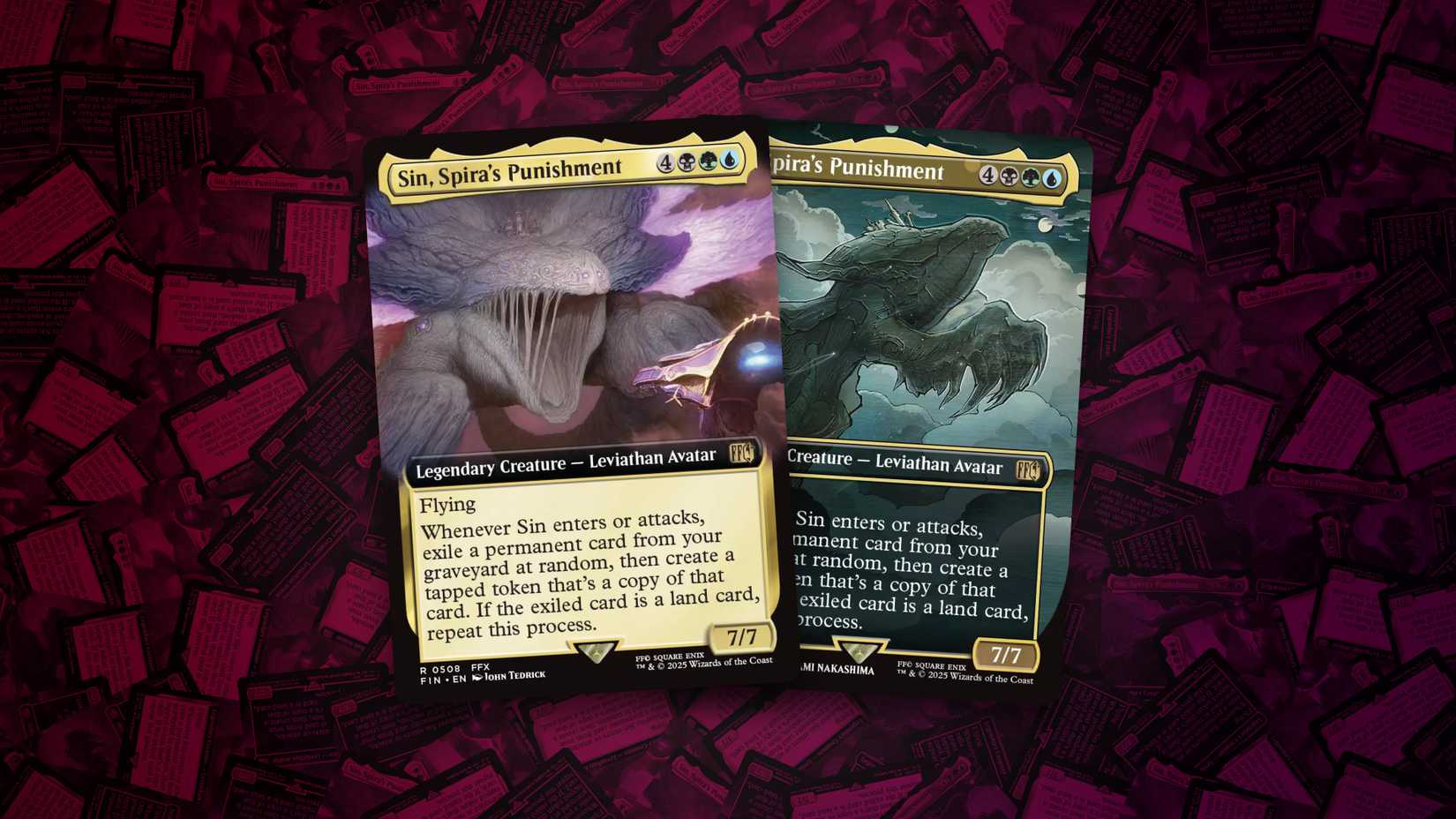
Sin embodies the crushing, generational fear at the heart of Final Fantasy 10. Its card avoids relying on brute force alone: whenever Sin, Spira’s Punishment enters the battlefield or attacks, it exiles a random permanent card from your graveyard. If that card is a permanent, Sin creates a tapped token copy of it; if it’s a land, the process repeats. That makes Sin an unpredictable value engine for Commander decks built around graveyard and land synergies. Cards such as Adrix and Nev, Twincasters can multiply its tokens, while Hedron Crab helps fill your graveyard with potential targets.
As the game goes on, Sin turns the remains of your battlefield into an ever-growing threat. The design also reflects the cycle of destruction and renewal that defines Final Fantasy 10. For a thousand years, Spira’s people have rebuilt after Sin’s attacks, while Summoners have made sacrifices to defeat the creature—at least temporarily. Even Sin’s seven-mana cost feels fitting for a monster of such scale, though a cost of 10 might have been an even more pointed reference.
9 Buster Sword
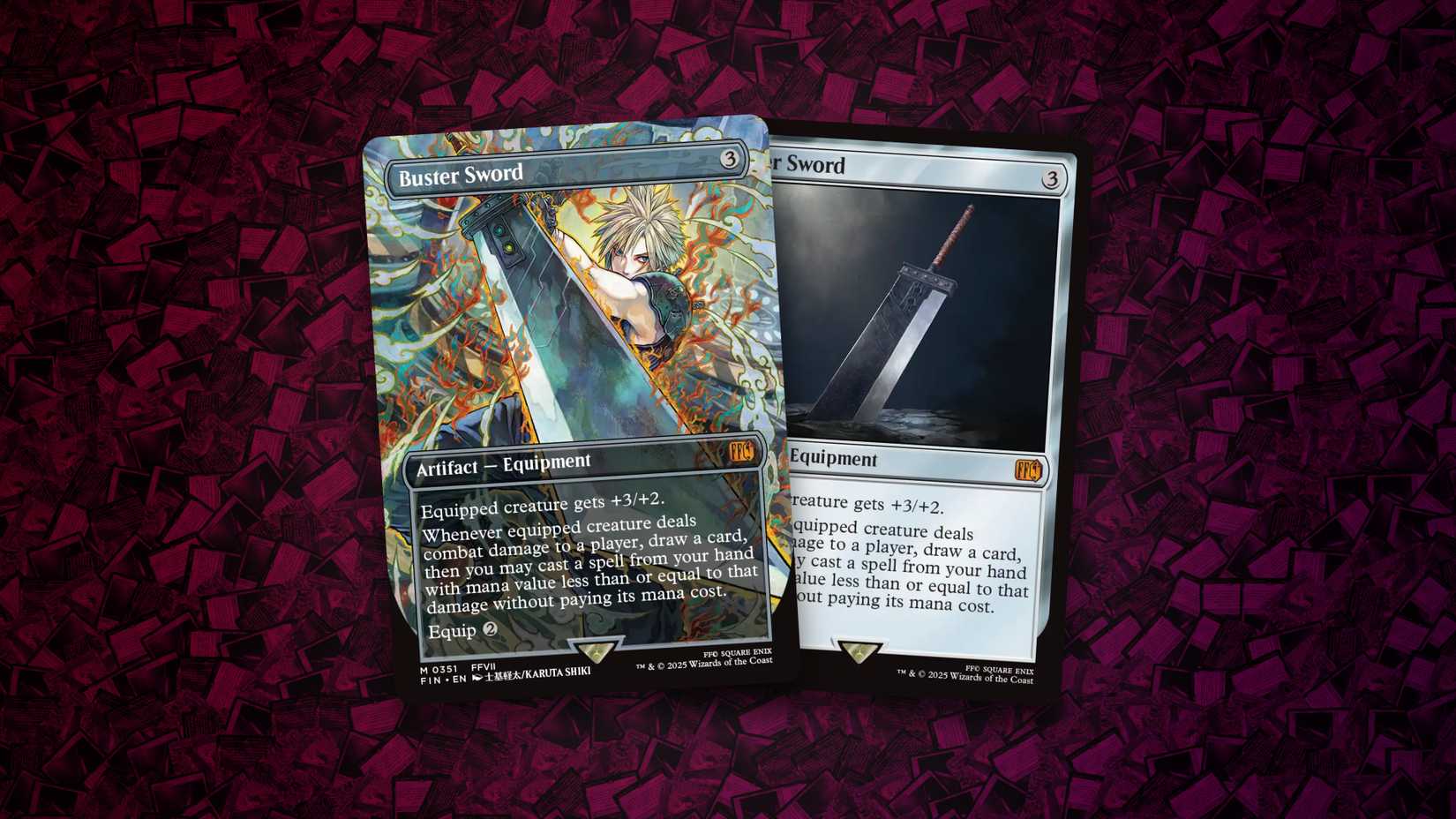
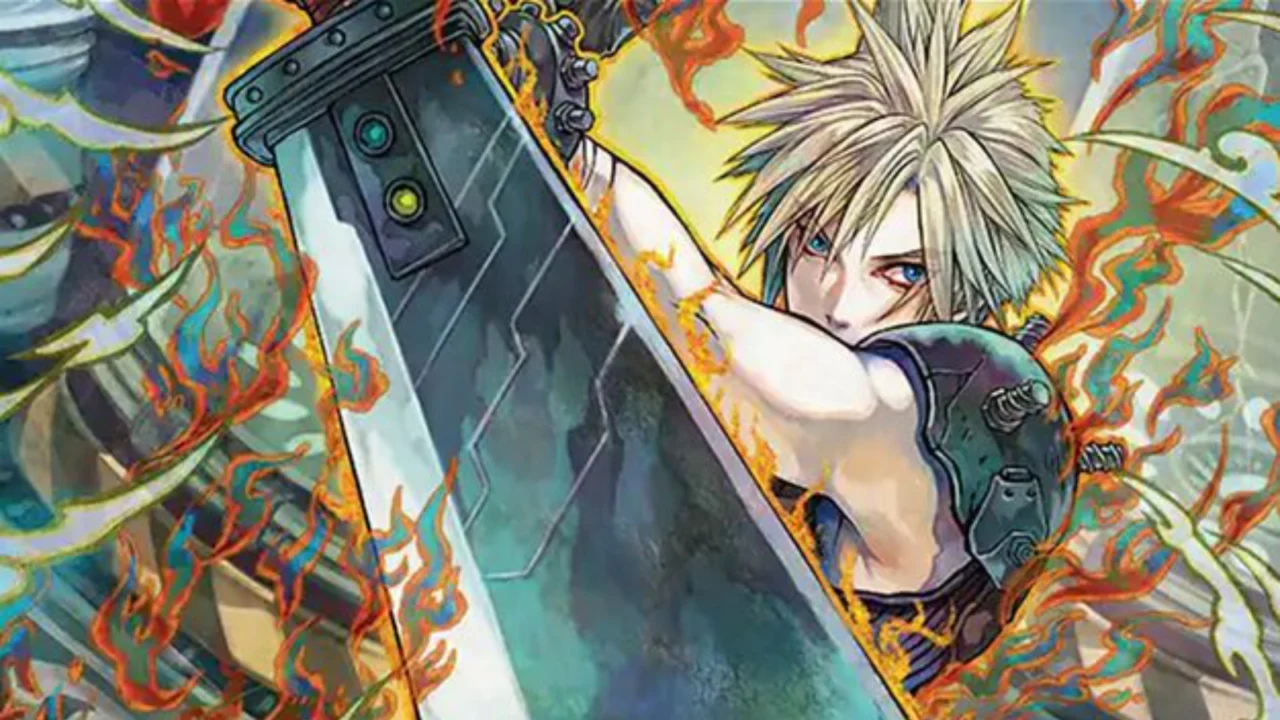
Few video game weapons are as instantly recognizable as Cloud Strife’s oversized Buster Sword. Whether you remember it strapped to his back in the industrial world of the original Final Fantasy 7 or scraping along the ground in Remake, the weapon means more than its striking silhouette suggests. Passed from Angeal to Zack and then to Cloud, it represents the weight of a legacy—and what one generation entrusts to the next.
Magic reflects that history through an Equipment card that gives its bearer +3/+2. When the equipped creature deals combat damage to an opponent, you draw a card and may cast a spell from your hand for free if its mana value is no greater than the damage dealt. It’s a powerful payoff for connecting with an opponent and a fitting tribute to one of the series’ most enduring symbols.
8 Jumbo Cactuar
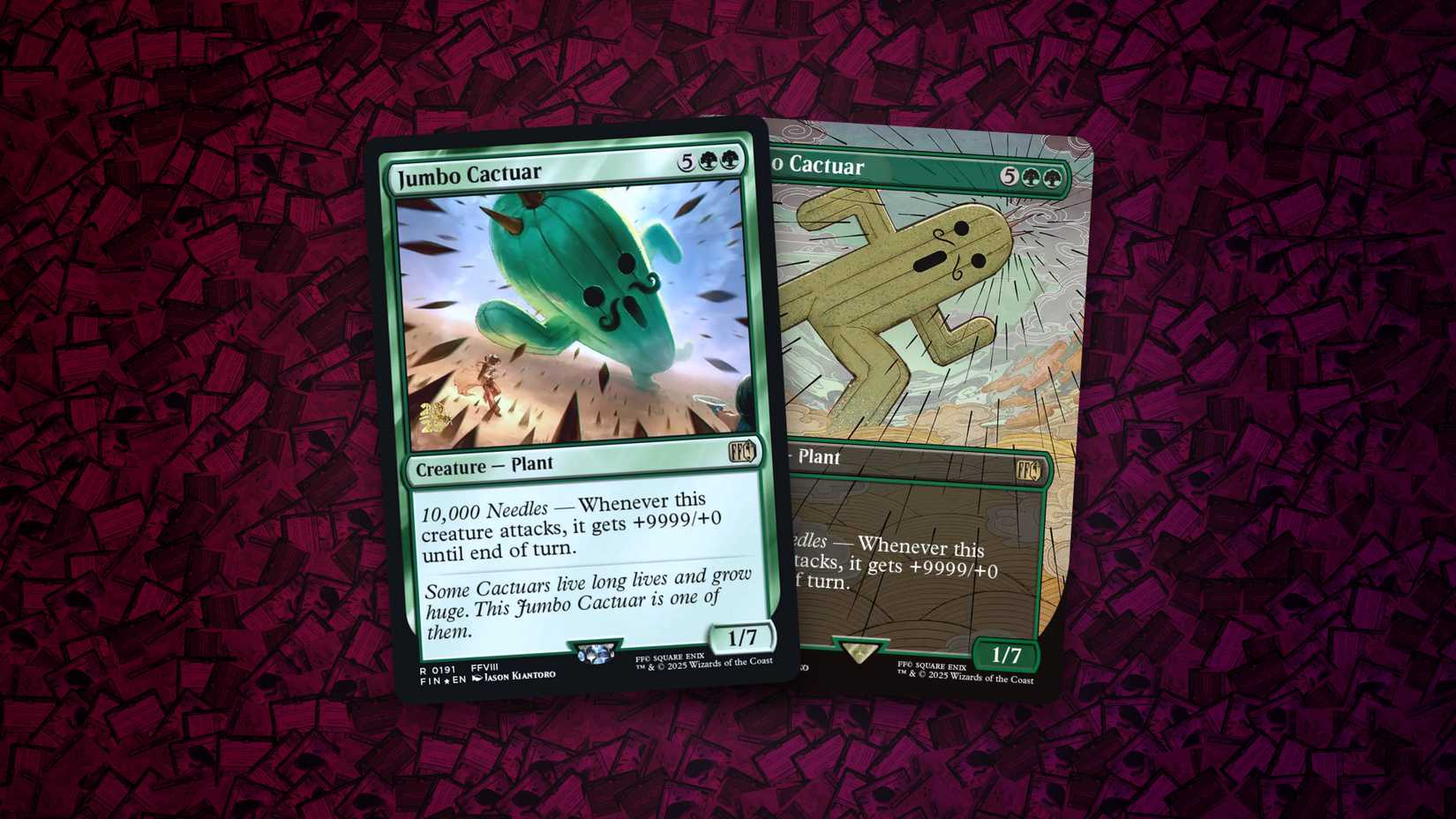
Cactuars may resemble harmless walking plants, but provoking one can mean facing a punishing storm of needles. These recurring Final Fantasy monsters are famous for looking unthreatening before delivering a devastating attack—a bit like the comically alarming Tonberry. Magic captures the joke perfectly with Jumbo Cactuar, a seven-mana creature that begins as a modest 1/7. Its 10,000 Needles ability gives it +9,999/+0 when it attacks.
That quiet-looking plant can suddenly swing with 10,000 power, threatening to crush nearly anything in its way. The effect is a wonderfully direct interpretation of the Cactuar’s signature attack. There’s no elaborate setup or complicated transformation: the card simply turns a familiar monster move into an outrageously powerful combat trick.
7 Lightning, Army of One
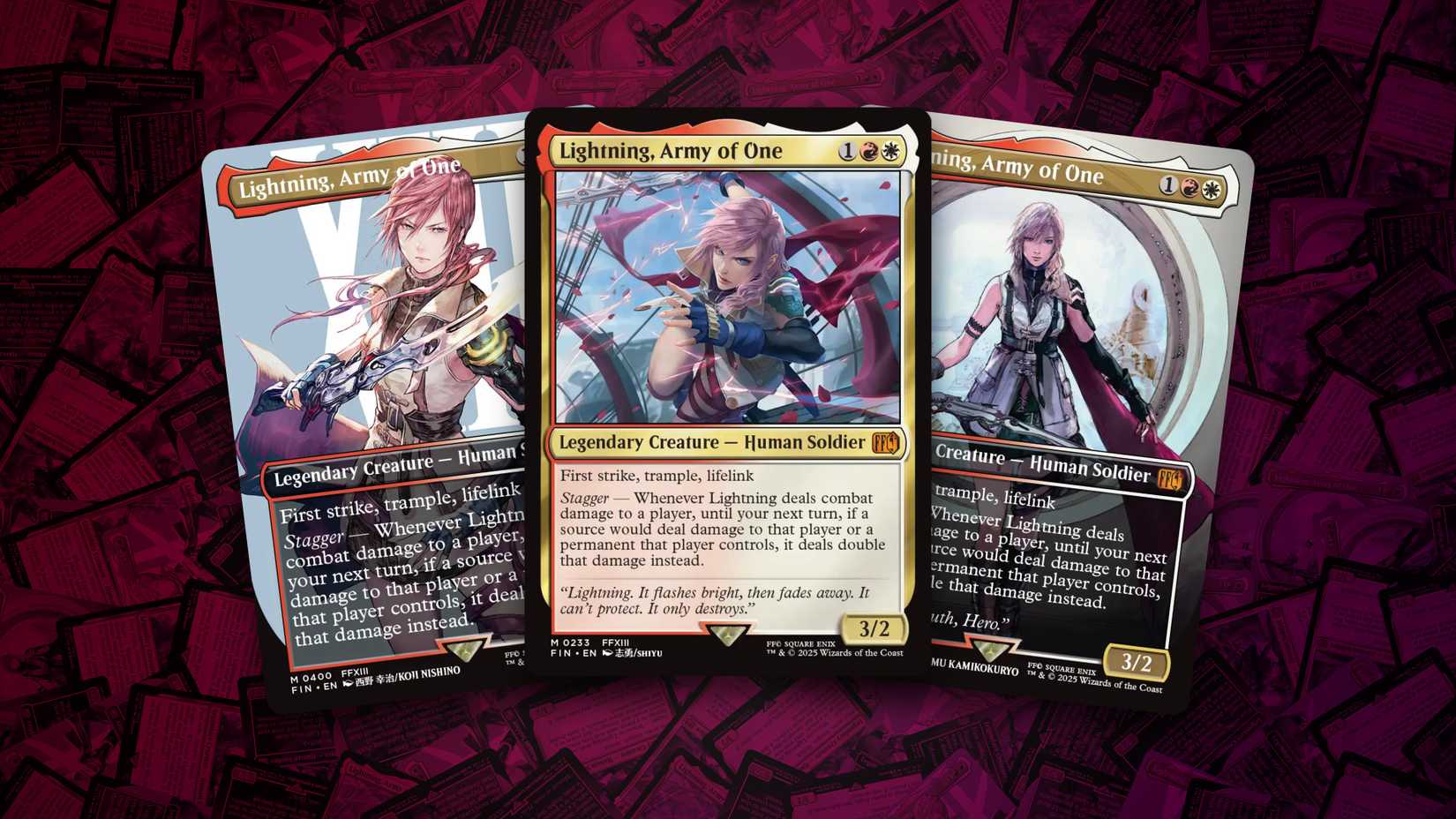
Final Fantasy 13 may be one of the franchise’s most divisive entries, but Lightning remains one of its standout protagonists. A determined former Guardian Corps sergeant, she takes immediate action when Bodhum’s citizens are targeted for exile, going AWOL, derailing a Purge train, and fighting through the Hanging Edge to save her sister.
Her Magic card reflects that forceful approach. For three mana, Lightning, Army of One arrives with first strike, trample, and lifelink. Its stagger ability makes the design especially memorable: whenever Lightning deals combat damage to an opponent, all damage dealt to that player and their permanents is doubled until your next turn. That ability echoes FF13’s combat system, where staggering an enemy leaves them vulnerable to a punishing follow-up. Here, Lightning can turn a successful hit into the opening move of a devastating assault.
6 Zack Fair
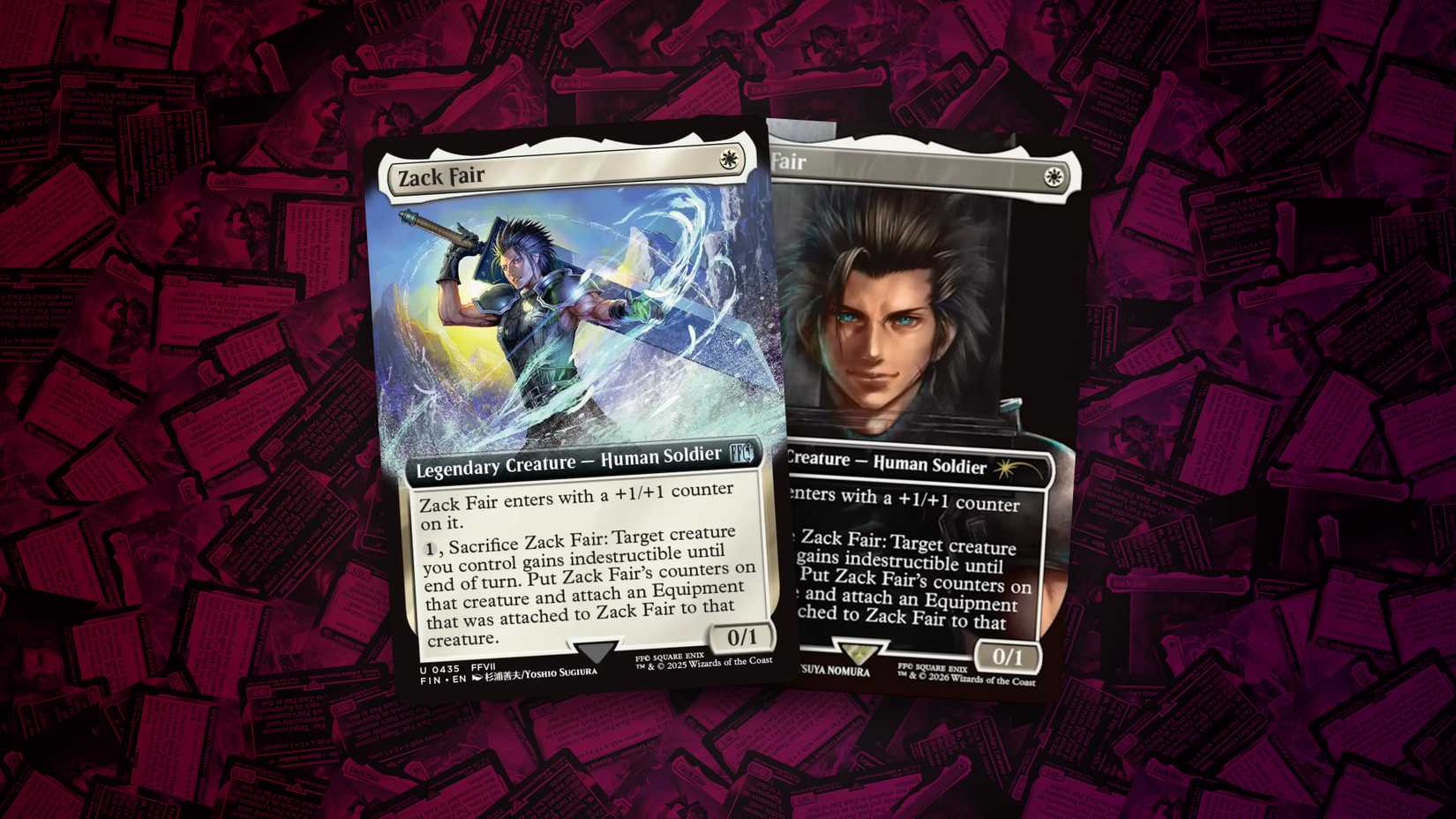
Zack Fair’s story is among Final Fantasy 7’s most painful, not least because his final moments shape Cloud’s journey so profoundly. Magic honors him with a 0/1 legendary creature that enters the battlefield with a +1/+1 counter. For one mana, you can sacrifice Zack Fair to give another creature indestructible, his +1/+1 counters, and any Equipment attached to him.
It’s a simple but affecting design: Zack’s death becomes an act of protection, and his strength and gear pass to someone else. That feels right for a character remembered for handing the torch to Cloud. The card can also support clever graveyard strategies. Reanimation cards such as Sun Titan or Lurrus can bring Zack back, letting players repeatedly protect their creatures and pass his bonuses along.
5 Aerith Gainsborough
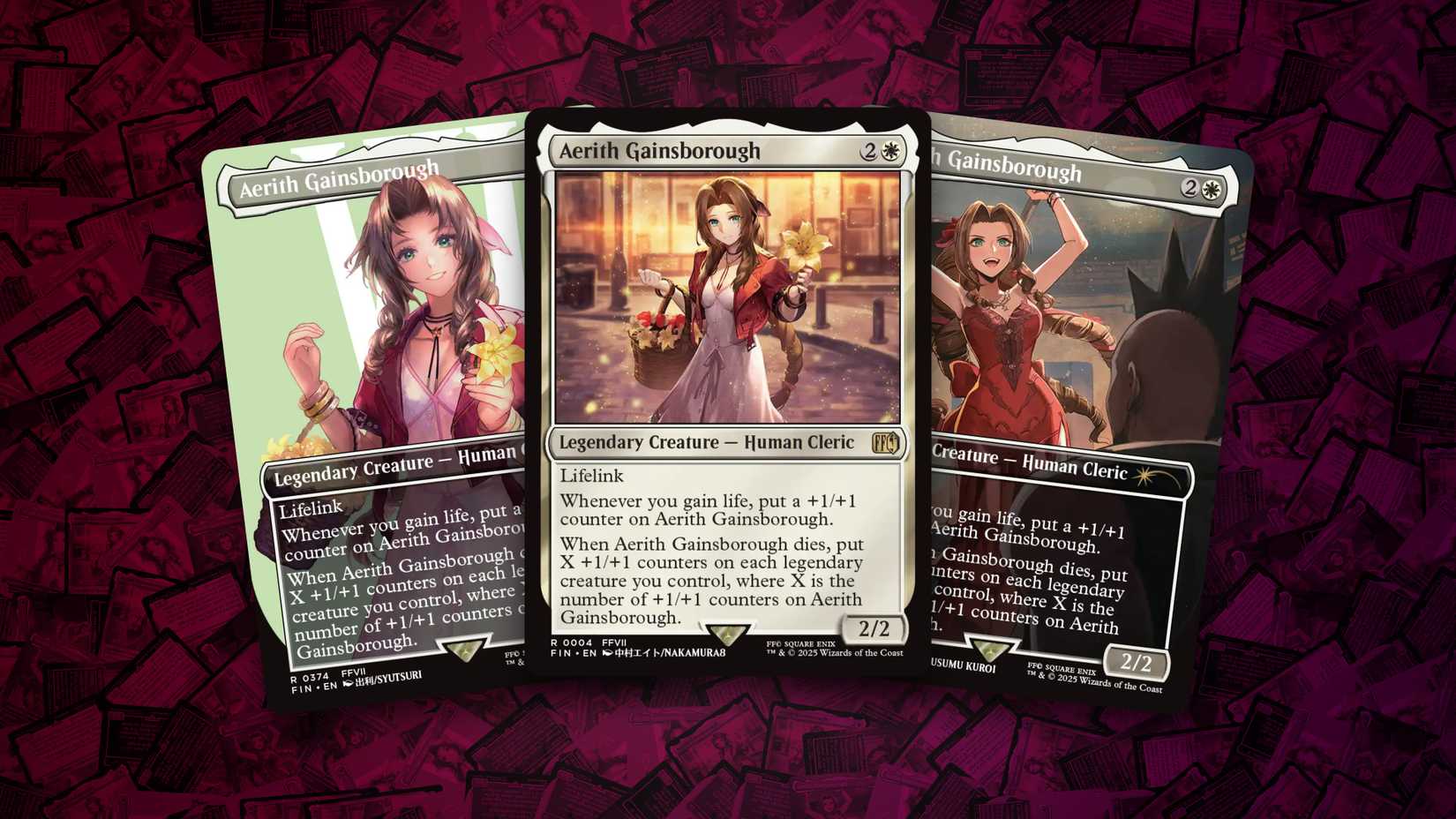
Aerith’s strength comes from compassion and resilience, not overwhelming force. A healer and the last surviving Cetra, she sells flowers in the Sector 5 slums while carrying the immense burden of protecting the Planet. In Magic, Aerith Gainsborough is a 2/2 legendary creature with lifelink. Whenever you gain life, she receives a +1/+1 counter, growing stronger as she helps keep your life total ahead of your opponents.
Her most meaningful ability triggers when she dies: each legendary creature you control gets +1/+1 counters equal to the number of counters Aerith had. It’s a poignant expression of the lasting influence she has on Cloud and the rest of the party. Her impact endures after she’s gone, carried forward by those she leaves behind. The bonus is even more welcome when there’s already a 12/12 Eldrazi on your side of the battlefield.
4 Yuna, Hope of Spira
Yuna is a Summoner above all else, making her a natural fit for a Magic card built around enchantments and the creatures they represent. Yuna, Hope of Spira encourages players to build around Saga creatures, the special enchantments in the set that bring the franchise’s iconic summons to the battlefield.
On your turn, Yuna gives herself and your other enchantment creatures trample, lifelink, and ward 2, making the whole group more threatening and difficult to answer. At the end of your turn, she can also return an enchantment from your graveyard to the battlefield with a finality counter, preventing it from returning to the graveyard again. It’s an effective portrayal of her summoner role and a natural centerpiece for an Aeon-themed deck featuring cards such as Yojimbo, Bahamut, and Knights of Round.
3 Summon: Knights of Round
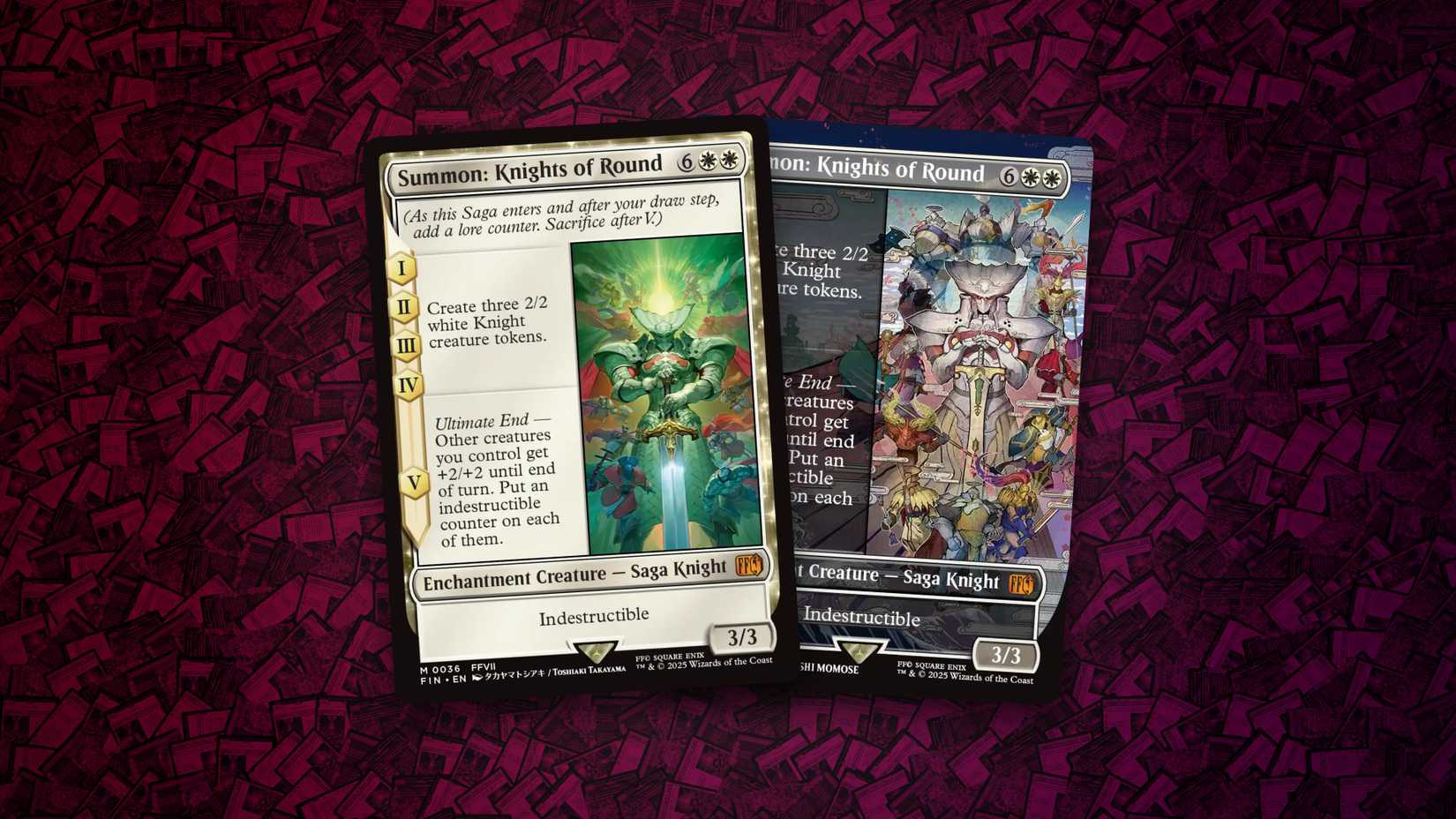
Knights of Round is both a fearsome summon in the games and a spectacular card. In Final Fantasy 7, this ultimate secret Materia is hidden on Round Island, which players can reach only with a Gold Chocobo. It calls forth 13 holy knights for a lengthy, devastating assault—an extravagant endgame spectacle that lets players watch Sephiroth’s health bar disappear.
Magic gives the summon an appropriately grand treatment. The eight-mana Saga creature, Knights of Round, builds an army over time, creating three 2/2 Knight tokens during each of its first four chapters. That’s 12 Knights before its fifth and final chapter, Ultimate End, gives your entire board +2/+2 and an indestructible counter on each creature. The patient design turns the summon’s famously long sequence into a visible countdown to a potentially game-ending finale. Unless, of course, an opponent has a counterspell ready.
2 Sephiroth, Fabled SOLDIER / Sephiroth, One-Winged Angel
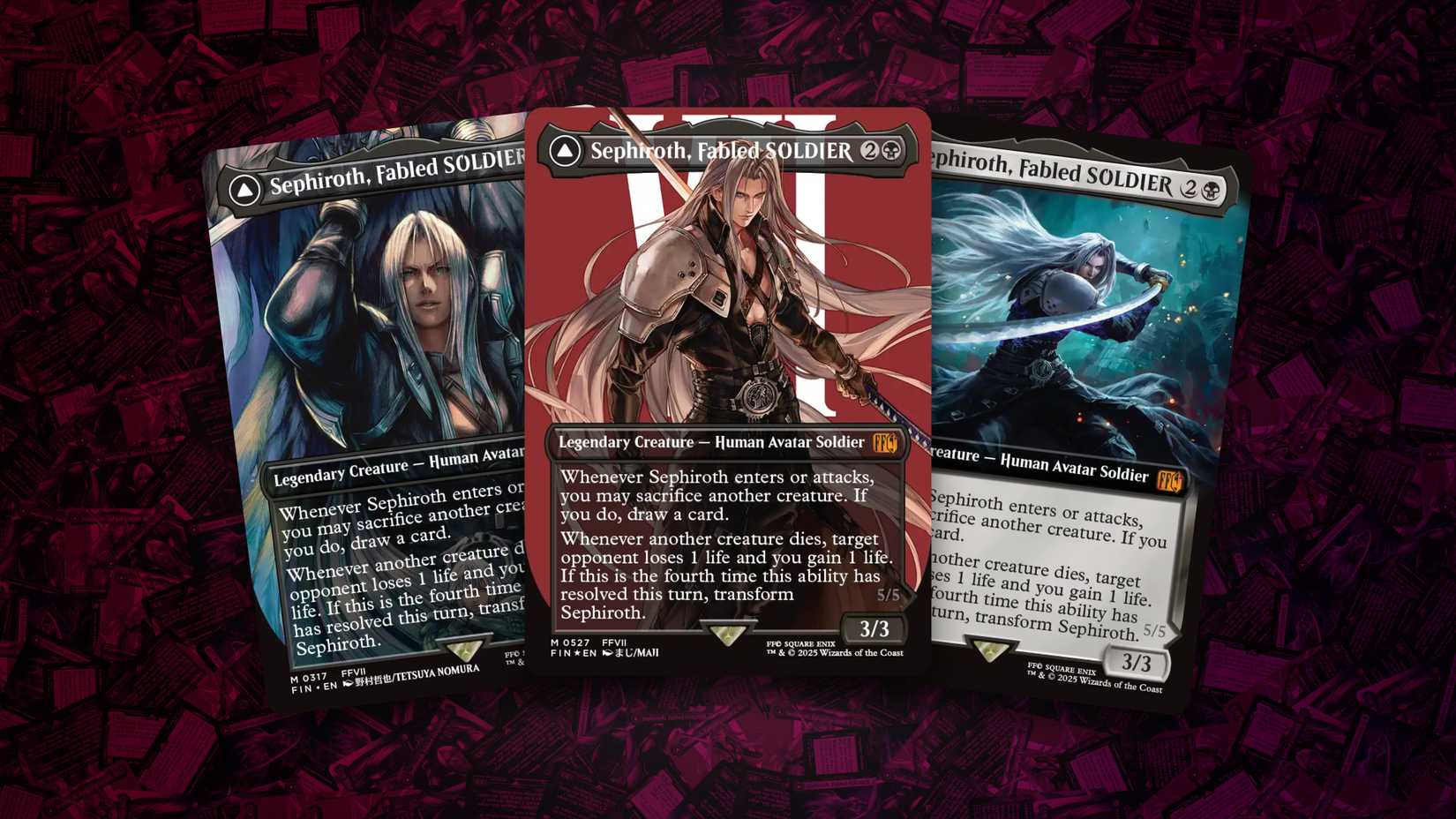
Sephiroth’s fall from celebrated First Class SOLDIER to the terrifying One-Winged Angel is one of gaming’s most memorable character transformations. Once Shinra’s greatest hero, he loses his grip on reality after learning the truth about his origins in the Nibelheim mansion: he was created using the alien calamity Jenova. He burns Nibelheim and comes to see humanity as little more than a parasite. His transformation shifts Final Fantasy 7 from a story of resistance against a corporation into a cosmic, apocalyptic struggle.
Magic conveys that descent with a double-faced creature whose threat grows as the battlefield fills with death. On its front face, Sephiroth, Fabled SOLDIER lets you sacrifice another creature when he enters or attacks to draw a card. Whenever another creature dies, you also drain one life from an opponent and gain one. After that ability has resolved four times in a single turn, Sephiroth transforms into One-Winged Angel, whose emblem keeps the life-draining effect active whenever creatures die. The result is a fitting portrait of Sephiroth’s rising power: as his enemies fall, the battlefield becomes an engine for his transformation.
1 Absolute Virtue
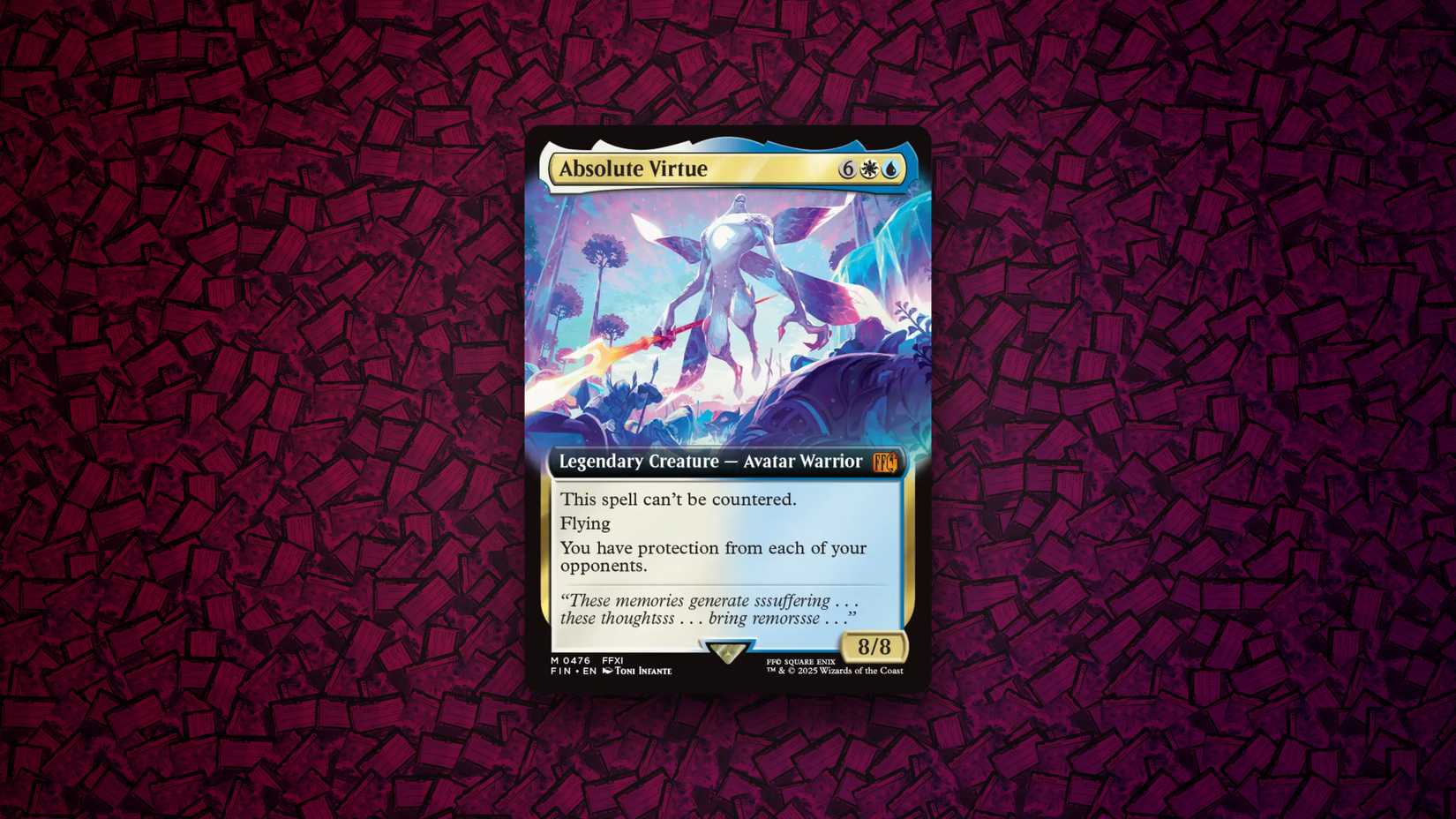
Final Fantasy 11 is filled with formidable foes, but few earned a reputation quite like Absolute Virtue. The optional superboss became notorious for its toughness and punishing difficulty. It could unleash powerful abilities associated with multiple player classes, including Benediction, which restored a huge amount of health when victory seemed close. Its passive regeneration made the fight even more grueling, demanding careful coordination from an entire alliance. Some groups spent more than 18 hours trying to defeat it, securing Absolute Virtue’s place among the most infamous boss encounters in MMO history.
Magic captures that intimidating presence with an eight-mana 8/8 that can’t be countered and has flying. Its most striking ability grants you protection from each of your opponents for as long as Absolute Virtue remains on the battlefield. Opponents can’t attack you, target you with spells, or enchant you. It’s a fitting take on a boss that once seemed almost impossible to overcome: players must first find a way through its defenses before they can even attempt to bring it down.
Source: Polygon
Related articles
 Epic Games Plans to Bring Its Launcher to SteamOS and Other Platforms
 BioWare Co-Founder Names a Price for Bringing Back Mass Effect 5
 Until Dawn 2 Will Remain Single-Player as Developers Discuss Endings and PS5 Capabilities
 Bandai Namco Shuts Down Unknown 9: Awakening Developer Reflector Entertainment
 How to Get and Use the Song of Storms in The Legend of Zelda: Ocarina of Time
 Universes Beyond’s Most Intense Villain Officially Ranks Among Magic: The Gathering’s Top 10 Commanders
 WARDOGS Season 3 Launch Date Announced Alongside 185,000 Bans and a New Map
 Rockstar Officially Confirms GTA 6 Is Playable on Xbox One