
Five Free Streaming Psychological Thrillers to Watch
Fiction is the safest way to explore the darkest recesses of the human mind. That is why psychological thriller movies remain so popular. These films trigger a fight-or-flight response within a controlled environment while entertaining audiences at the same time. Interpersonal relationships become the source of anxiety, as there is more at stake than physical safety. The novelty of great psychological thrillers like Rear Window (1954), Memento (2000), or Mulholland Drive (2001) does not wear off after a first watch. There is more to glean than suspense or a plot twist, as catharsis remains an integral part of the experience.
Most psychological thriller movies online require a paid subscription to Netflix, HBO Max, or Prime Video, but select titles are available to stream for free. Five fantastic psychological thrillers can be watched at no cost.
American Psycho (2000)
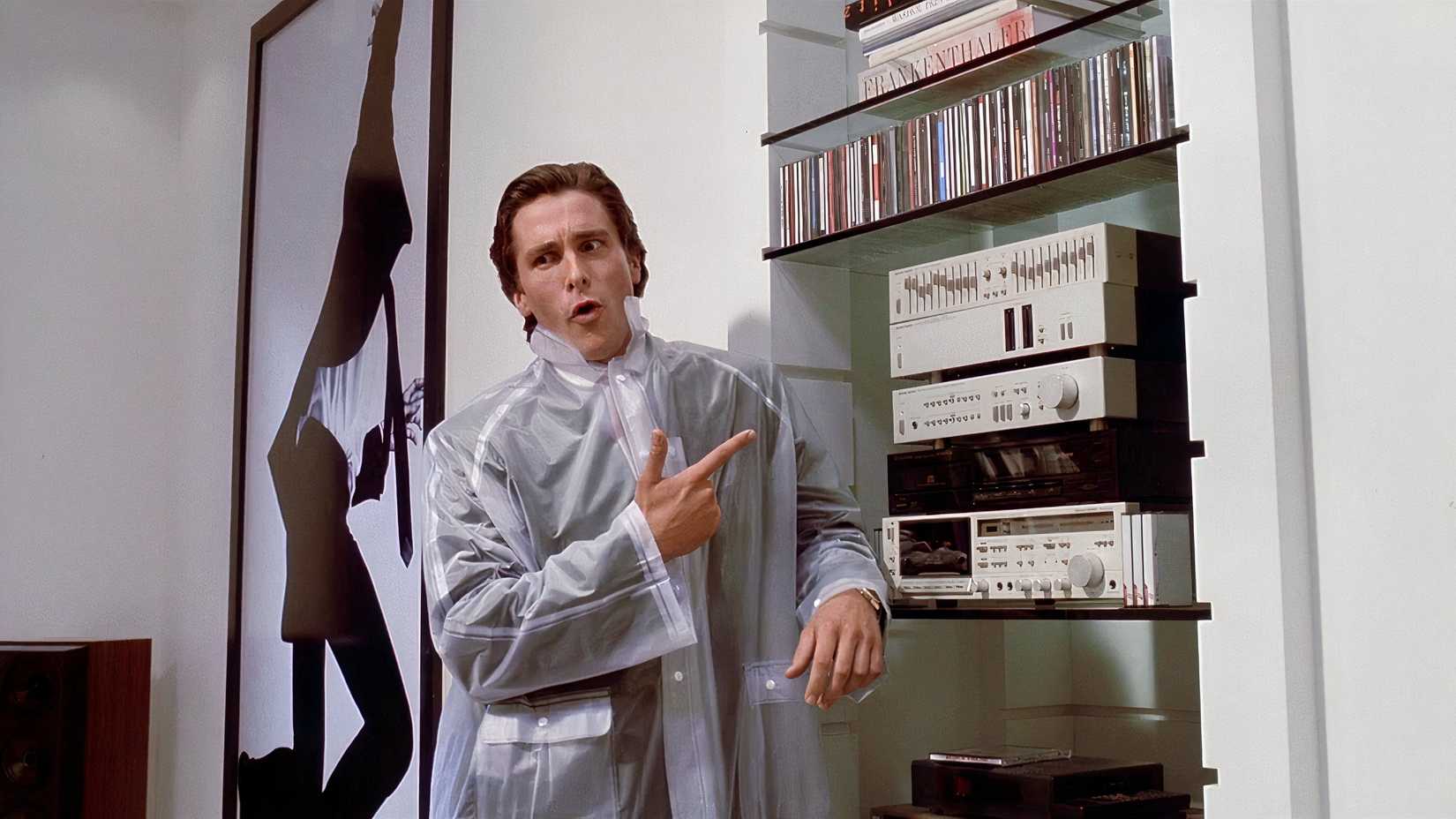
Where to watch: Roku
Author Bret Easton Ellis wrote American Psycho primarily as a critique of postmodern capitalism, but director Mary Harron adapts the story into a lean and viciously satirical thriller that lampoons toxic masculinity. The film follows Manhattan investment banker Patrick Bateman, played by Christian Bale, who hides the reality of being a violent serial killer beneath a polished social facade. Bateman’s mask keeps slipping as the film progresses, but his shallow circle of Wall Street colleagues fails to identify the red flags. While Bateman prides himself on being a curator of exceptional taste, his appearance is indistinguishable from the men around him, highlighting the death of individuality.
Harron’s adaptation succeeds by stripping Bateman of mythology. He appears as a caricature, and even the most disturbing kills are framed through the lens of black comedy. *American Psycho* wields its satirical edge with the help of an exceptional central performance. Despite the misappropriation of Bateman as a toxic “sigma male” mascot, Bale plays the character as a soulless consumer obsessed with hollow aesthetics. The psychological thriller framework works for a film that steadily builds toward a surreal ending with no catharsis.
We Need to Talk About Kevin (2011)

Where to watch: Pluto TV
Is a child born evil, or do they become so due to sociocultural factors? *We Need to Talk About Kevin* explores the nature versus nurture debate with chilling efficacy. In the film, Eva Khatchadourian, played by Tilda Swinton, is ostracized by her community because her teenage son, Kevin, played by Ezra Miller, mass-murdered students at his high school. Eva looks back at the experience of raising Kevin, especially within the context of being a reluctant mother who perceived him to be a difficult child since birth.
The film makes viewers question whether anyone could have prevented the tragedy from occurring. Scenes showing Eva and Kevin interacting highlight their strained and distant relationship. Fragmented recollections piece together Eva’s story, granting it a suffocating quality while she navigates present-day hostility. The fact that only Eva is blamed for Kevin’s crimes raises pertinent questions about patriarchal misogyny, where mothers bear the full brunt of blame for the sins of their children.
Burning (2018)

Where to watch: Pluto TV
Lee Chang-dong’s South Korean psychological thriller, Burning, is gripping and uneasy. Aspiring novelist Lee Jong-su, played by Yoo Ah-in, runs into his childhood neighbor Shin Hae-mi, played by Jeon Jong-seo, while doing odd jobs in Seoul. Although the protagonist struggles to remember her at first, his old friend insists she had plastic surgery to explain her altered appearance. The duo soon meets a mysterious man named Ben, played by Steven Yeun, whom Lee perceives as a danger to Shin Hae-mi. *Burning* maintains ambiguity as the primary source of tension.
Every character is haunted by an unfulfilled longing. Some longings relate to class-based anxieties tied to material wealth and social status, while others remain existential. *Burning* blends these themes with Lee’s paranoid perspective to create an unreliable narrative with occasional glimpses of objective truth. Tension builds through subtle character dynamics that constantly evolve. As a protagonist blinded by jealousy and class insecurity navigates the plot, the film serves as a riveting exploration of the human condition.
Possessor (2020)

Where to watch: Plex
In Brandon Cronenberg’s Possessor, assassin Tasya Vos, played by Andrea Riseborough, takes over other people’s bodies and consciousnesses to carry out hits. The only way for her to return to her own body is to force the host to end their life after the assignments are complete. Once she takes over Colin Tate, played by Christopher Abbott, to assassinate a chief executive officer, Tasya’s neurological state worsens. She finds it difficult to differentiate between herself and the target. Tate proves to be a more resilient host than most, pushing the body horror elements to extremes.
*Possessor* works as a psychological thriller through its immersive exploration of Tasya’s psyche, which fragments further after she hijacks Tate’s body. Disturbing questions about identity arise as Tasya struggles to separate her own thoughts from those of her hosts. Tate’s perspective remains horrifying as he shares a consciousness with an assassin. *Possessor* functions as a critique of modern surveillance and corporate data mining through a surreal experience.
Audition (1999)

Where to watch: Kanopy
Psychological thrillers that lean into realistic horror create a unique sense of anxiety. Takashi Miike’s Audition excels in this approach by opting for slow-burn tension instead of a breakneck pace. Widower Shigeharu, played by Ryo Ishibashi, asks his film producer friend Yoshikawa, played by Jun Kunimura, to stage fake auditions so he can meet someone new. Shigeharu fixates on Asami, played by Eihi Shiina, a former ballerina with a sweet and docile demeanor. Although Yoshikawa is suspicious of Asami’s dubious résumé, Shigeharu ignores the warning signs until he is trapped in a complex web of jealousy and revenge.
*Audition* holds up a mirror to the objectification of women in Japanese society while exploring the damaging impact of trauma on young women like Asami. Miike uses unsettling visual breadcrumbs to lead up to a major reveal, after which the film drastically shifts in tone. The uncomfortable aspects of *Audition* maintain a startling authenticity despite the use of shock value in the second half. The film functions as a rich character study of complex figures indulging in grisly worldviews.
Source: Polygon
Related articles
 Xbox is paying players to launch Gears of War: E-Day
 Modern Warfare 4 Will Reportedly Not Include a Platinum Trophy on PlayStation
 Sony Pulls Its Own Games From PS Store in Select Regions
 How to Fish Reaches 10 Million Players as Developers Prepare Major Update and Console Ports
 Roguelike Strategy Game Crown Must Hold Announced
 Xbox 360 Software Jailbreak Released Nearly 20 Years After Launch
 11 Perfectly Designed Marvel Superhero Magic Cards That Are 10/10, No Notes
 Asha Sharma Says Xbox Needs New Gaming Franchises to Survive