One of Pokémon’s enduring strengths is its spirit of exploration. The 1990s anime distilled a powerful daydream for young viewers — traveling across vast regions with little more than resourcefulness and loyal Pokémon, all in pursuit of becoming a true Pokémon Master. That goal once meant catching them all; over time it shifted toward being the strongest trainer. Still, the earliest Game Boy and DS titles never fully captured the romping, on-the-road freedom the show made feel effortless.
That dynamic shifted with Pokémon Legends: Arceus, which introduced a free-form catching system that let players toss Poké Balls in the overworld without triggering battle sequences. Arceus set players loose in wide-open, varied landscapes — icy peaks, soaring ridges, and glinting lakes — and made encounters feel organic. Its follow-up, Pokémon Legends: Z-A, reimagines that idea in an urban key: Lumiose City is an expansive metropolis threaded with Wild Zones that act as compact pockets for catching and combat.
Unlike Arceus, Z-A links its districts into a continuous cityscape and fills the streets with NPCs who hand out everything from delivery tasks to duels. Some moments evoke the anime perfectly — clearing a path of four wild Beldum or crossing paths with eccentric locals, like a trainer who soon shows off newly evolved Metangs. Those encounters capture the episodic thrills of Ash’s travels.
 Image: Game Freak, The Pokémon Company/Nintendo via Polygon
Yet despite its ambitions, Z-A doesn’t always convey the same sense of open-ended possibility that the anime — and to a degree Arceus — delivered. Lumiose City’s density works against the idea of roaming: buildings, side activities, and trainers are abundant, but the Wild Zones read as isolated patches rather than a single, sweeping wilderness. By contrast, the sparse expanses in Arceus felt liberating because there was room to breathe and explore without interruption. Lumiose dazzles with detail, but its compartmentalized design shrinks exploration into a series of small arenas instead of a continent-spanning journey.
Catching in Z-A also feels less considered. The lock-on often falters — Poké Balls can miss even when your aim seems precise, breaking immersion. Where Arceus treated catching as a nuanced mechanic, with different ball types affecting weight and trajectory and forcing you to think about distance and timing, Z-A flattens those distinctions: many Poké Ball varieties lack distinctive behavior, making throws feel interchangeable.
There’s a real sting when a stealthy approach and a flawless toss are undone by a ricochet that sends a rare target fleeing — whether that’s a shiny Abra or a prized Froakie. The deliberate stealth-and-precision loop of Arceus has been swapped for a flashier, more chaotic combat rhythm in Z-A, with catching often feeling like an afterthought. The existence of an NPC who retrieves misthrown balls hints at how unforgiving the system can be and doubles as a practical way to avoid wasting in-game currency.
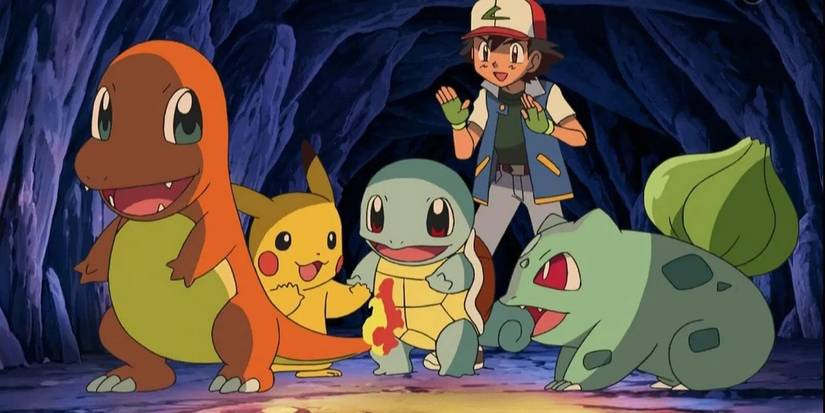 Image: OLM, Inc./The Pokémon Company
Although The Pokémon Company has largely moved on from the old “Gotta catch ’em all” tagline, completing the Pokédex remains a central draw — especially for shiny hunters who prize any mechanical edge. For many players, Arceus felt like a game built around thoughtful, tactical catching; Z-A often feels optimized for rapid battles. Both aim high, but I wish Z-A had leaned more into what made Arceus sing, melding precision capture with kinetic combat. Until the franchise learns to combine those strengths, its best ideas will stay scattered across different entries. Where Arceus made me feel like I was living the anime fantasy, Z-A sometimes reads like a well-made sandbox version of that same dream — entertaining, but a little less true to the wanderer’s heart.
Source: Polygon