Even more than three decades after its arcade debut, Mortal Kombat retains hidden corners and the power to surprise. The new Legacy Kollection packages the franchise’s formative years — four arcade mainlines, a slew of console and handheld ports, and several spin-offs — into a collection that functions as both a carefully emulated game anthology and an engrossing documentary on the series’ origins.
As a long-time Mortal Kombat follower, I still discovered fresh details and perspectives in the collection’s archival material.
Mortal Kombat: Legacy Kollection, built by Digital Eclipse, blends playable preservation with filmic context. It bundles arcade originals — Mortal Kombat, Mortal Kombat 2, Mortal Kombat 3, and Mortal Kombat 4 — alongside a range of console and handheld conversions. The set even includes the franchise’s ill-fated diversions, such as the action-oriented Mortal Kombat Mythologies: Sub-Zero and Mortal Kombat: Special Forces, which rank among the series’ weaker experiments.
Rather than presenting a curated “greatest hits,” the Legacy Kollection reads like a historical study of Mortal Kombat’s earliest experiments — a period when Midway and creators Ed Boon and John Tobias were inventing a digitized, actor-based fighter with minimal precedent. The documentary segments, produced by Area 5, weave together archival footage, new interviews, scanned flyers, comics, and even internal faxes. The result is a vivid portrait of how a handful of resourceful developers, working with scant oversight and a do-it-yourself ethos, turned a niche arcade attraction into a global phenomenon.
 Image: Digital Eclipse/Atari, Warner Bros. Games
The documentary tracks Mortal Kombat’s ascent and chronicles the careers of its creators during the Midway era. It also explores the pressures they faced to continually top their own breakthroughs. Compiled from VHS tapes, photographs, sketches, and other analogue ephemera, the shorts capture the franchise’s grassroots development and the oral legends that circulated through arcade culture. Presented in digestible chapters, the documentary is both informative and highly watchable, with bonus material that includes unused moves and unreleased sprite work from the cutting room floor.
Throughout the five-part series, viewers are prompted to load the original games themselves. At key moments you can jump from the documentary into an emulated match — a neat way to juxtapose context with the actual experience of playing these titles on contemporary hardware.
I spent most of my time on the arcade staples — the original Mortal Kombat, Mortal Kombat 2, and Ultimate Mortal Kombat 3. Many of those entries still hold up, particularly in local versus play. The single-player CPU remains a relic of its era, however: AI opponents often behave unfairly or monotonously. While online multiplayer is available for many titles, its feature set is light; the collection shines brightest when you have a human opponent beside you.
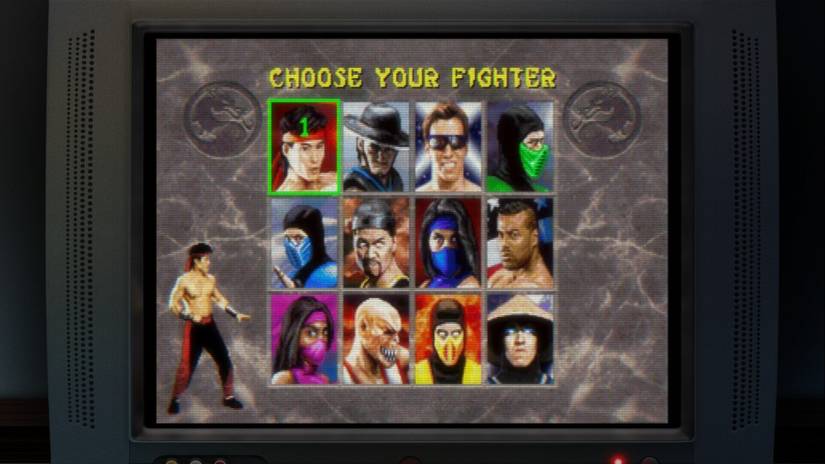 Image: Digital Eclipse/Atari, Warner Bros. Games
The collection includes 23 playable entries across arcade, console, and handheld platforms, and the emulation is largely faithful. I did notice occasional input lag and a few bugs — most notably in Mortal Kombat 4. Digital Eclipse supplements authenticity with convenient modern features: on-screen special-move lists, infinite time for executing Fatalities, and unlock toggles for secret characters such as Noob Saibot, Meat, and Rain. These options make the package accessible without compromising preservation.
Graphically, the suite lets you apply a variety of display treatments. Realistic CRT filters recreate the look of arcade and tube televisions, while options that simulate Game Boy greenscale or add period-correct bezels enhance the presentation. The soft reflection of the game screen on a faux plastic bezel is a particularly stylish touch.
Beyond emulation and the filmic material, the collection includes extras like a music player for revisiting classic soundtracks and character dossiers that compile bios and arcade attract-mode lore and endings.
One standout for preservationists is the inclusion of Ultimate Mortal Kombat 3 Wavenet Edition — a rare, early attempt at arcade network play. The Wavenet build, which offered one-on-one online challenges and modest fixes to UMK3, never achieved commercial traction due to cost and infrastructure limits. Digital Eclipse emulated this version thanks to a ROM dump from engineer Mike Boon (Ed Boon’s brother), turning a long-lost arcade variant into a playable artifact.
The collection’s lineup covers many notable entries and ports: the four original arcade titles; versions for Sega Genesis, Super NES, Game Boy, Game Gear, 32X, and PlayStation; and highlights like the PlayStation Mortal Kombat Trilogy, which packed 32 characters from MK1–3. The Super NES port of Mortal Kombat 2 remains an enjoyable revisit, and the contrast with the weaker Genesis conversion is revealing.
Some inclusions are historically interesting but rough around the edges. The Game Boy adaptation of the first Mortal Kombat is nearly unplayable, yet its presence underscores how ubiquitous the brand was in the early ’90s — even imperfect tie-ins sold widely.
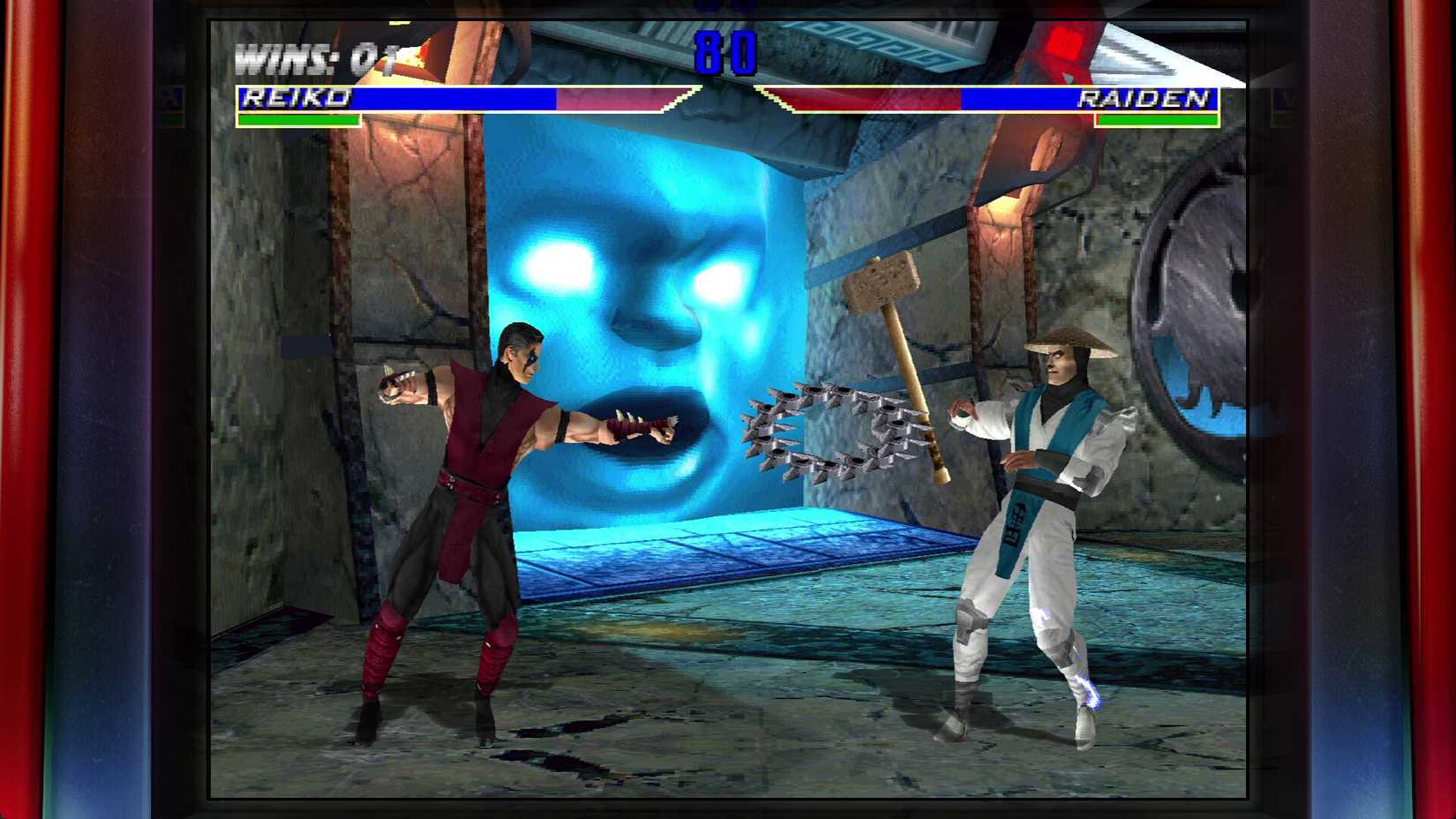 Image: Digital Eclipse/Atari, Warner Bros. Games
Digital Eclipse also added thoughtful quality-of-life tools to rehabilitate some of the rougher experiments. Mortal Kombat Mythologies: Sub-Zero, long maligned for its awkward platforming and controls, gains a “modern controls” option and a rewind feature that significantly improves playability. The package also includes three Game Boy Advance conversions — Mortal Kombat Advance, Mortal Kombat: Deadly Alliance, and Mortal Kombat Tournament Edition — which serve as intriguing adaptations of the series’ transition into 3D on home hardware.
Given the franchise’s sprawling catalogue and multiple arcade revisions, one could argue the collection might have been even more expansive. Still, what’s included feels deliberately assembled: a robust, lovingly curated snapshot of what made Mortal Kombat a subject of fascination for the past 33 years.
Mortal Kombat: Legacy Kollection is available now on Nintendo Switch, Nintendo Switch 2, PlayStation 4, PlayStation 5, Windows PC, Xbox One, and Xbox Series X. The game was reviewed on PS5 and Switch 2 using a prerelease download code provided by Atari. You can find additional information about Polygon’s ethics policy here.
Source: Polygon