Stealth-focused games frequently give players an ability that sharpens their senses. In The Last of Us, Joel and Ellie can pinpoint clickers; Assassin’s Creed characters use Eagle Vision to outline foes and points of interest; and in Ghost of Tsushima, Jin Sakai gains a ghostly hearing that turns him into a lethal shadow. So what about Atsu in Ghost of Yōtei — does she get a similar listening power?
Ed. note: Spoilers for Ghost of Yōtei follow.
If you’ve been roaming Sucker Punch’s new open-world samurai title, you might assume the game never grants that supernatural, enemy-revealing hearing. Several players have pointed this out on Reddit, noting that stealth encounters appear designed for a focused-hearing tool but that it doesn’t arrive immediately. In fact, the game does include such a power — called Listen — but it’s tucked away deeper into the story rather than given up front. One thread and another discussion on the Ghost of Yōtei subreddit highlight this confusion.
Atsu can pursue the Yōtei Six in almost any order: rematch Lord Saito, snuff the Oni’s flame, or hunt the Kitsune. But it’s easy to get sidetracked exploring Ezo’s landscape — praying at shrines, soaking in hot springs, and training with weapon masters can consume hours before you confront a single member of the Six.
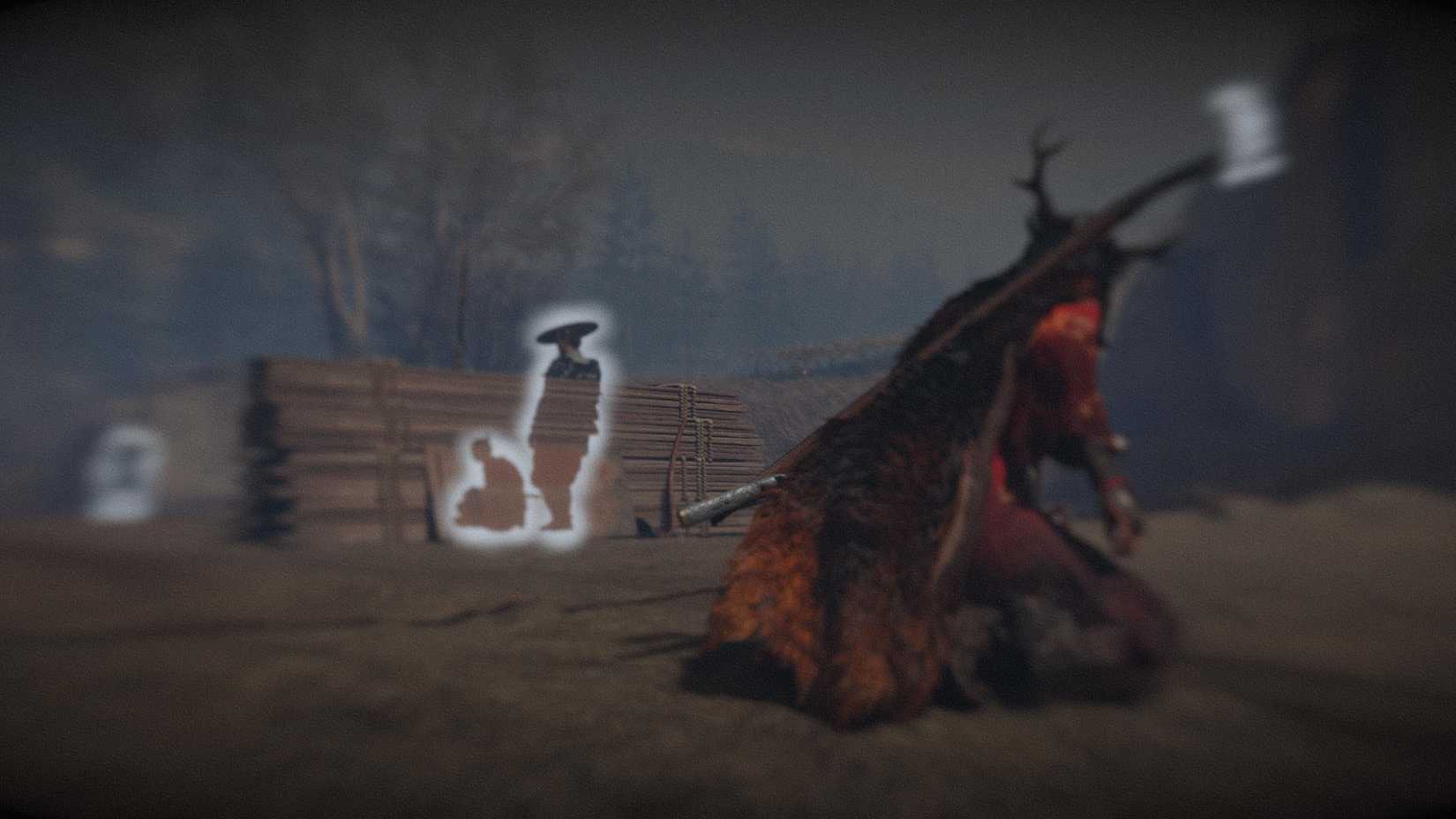 Image: Sucker Punch Productions/Sony Interactive Entertainment via Polygon
You actually unlock Listen deep in the main questline. While tracking the Kitsune and his Nine Tails shinobi through the snowy Teshio Ridge, Atsu gains the focused-hearing ability that highlights nearby enemies — making stealth approaches cleaner and more predictable. That said, Listen arrives well after many of the game’s stealth-like encounters, which explains why some players felt it was missing.
Over roughly 33 hours exploring Ezo so far, I’ve tended to favor direct confrontation over shadowy takedowns. Stealth is a valid and effective option, but the game’s visceral, moment-to-moment combat — especially when the wolf ally intervenes — often proves more entertaining than sneaking around.
As you clear wolf dens and invest in the companion’s skill tree, the canine shows up more frequently. When I approach an encampment intending a silent purge, the UI often offers a standoff prompt alongside the shamisen cue to call the wolf. More often than not, I hit that prompt and let the wolf loose.
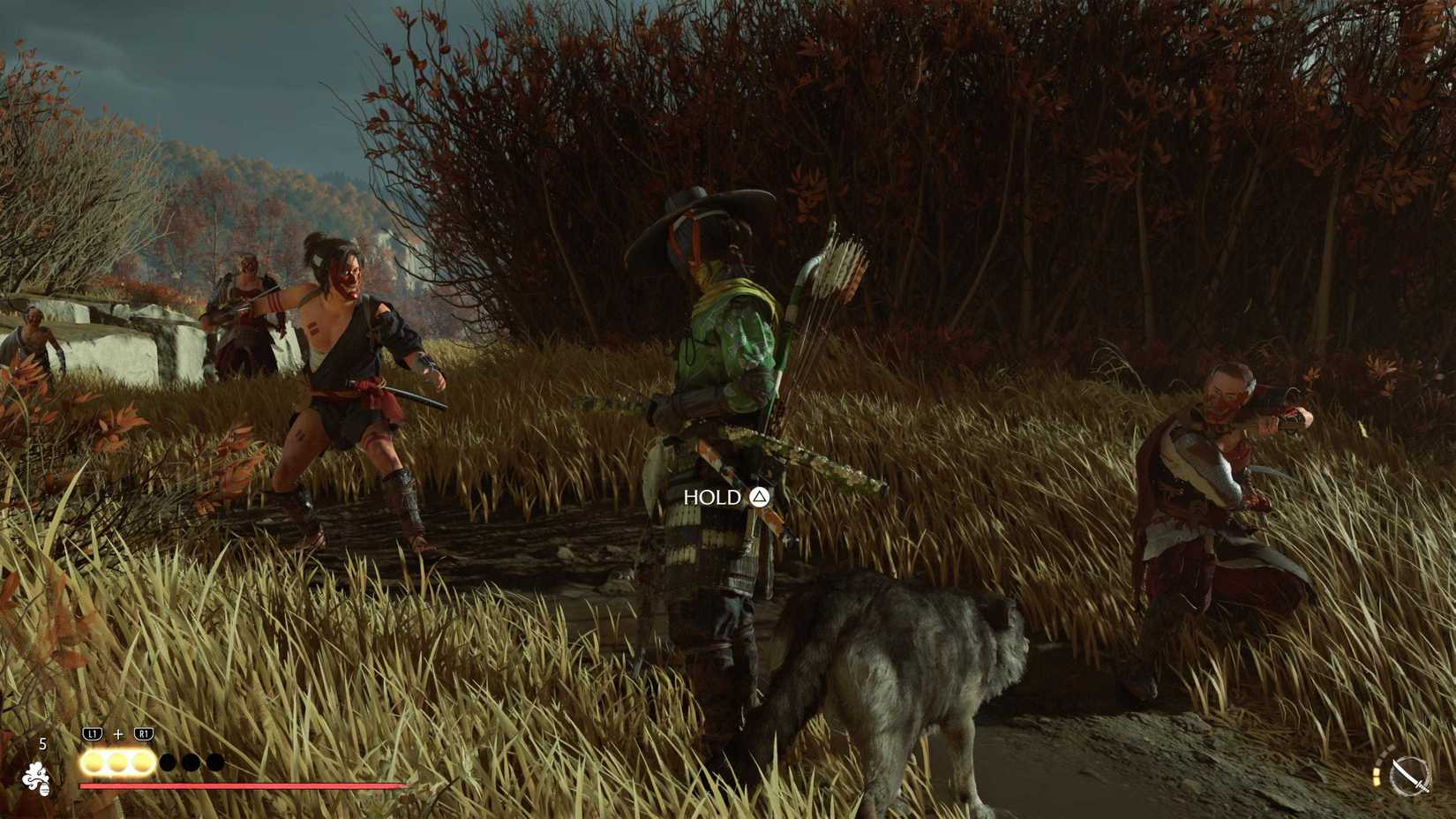 Image: Sucker Punch Productions/Sony Interactive Entertainment via Polygon
Standoffs are inherently dramatic — partner standoffs are twice as stylish — and when your partner is a wolf, the sequence becomes electrifying. The wolf can finish off targets during a standoff, create openings by staggering foes, and even react to thrown items (I get a kick out of tossing empty sake jars to bait a lunge). It’s a reliably satisfying way to dismantle enemy camps, whether they’re overrun by Oni Raiders or Nine Tails marauders.
With skills unlocked across Atsu’s and the wolf’s trees, the pair become exceptionally potent, to the point of feeling overpowered in some builds. Between stealth options, standoffs, and full-frontal assaults, the game provides a breadth of viable approaches — and for me, that wolf-assisted chaos has often outshone the need to use Listen regularly.
Source: Polygon